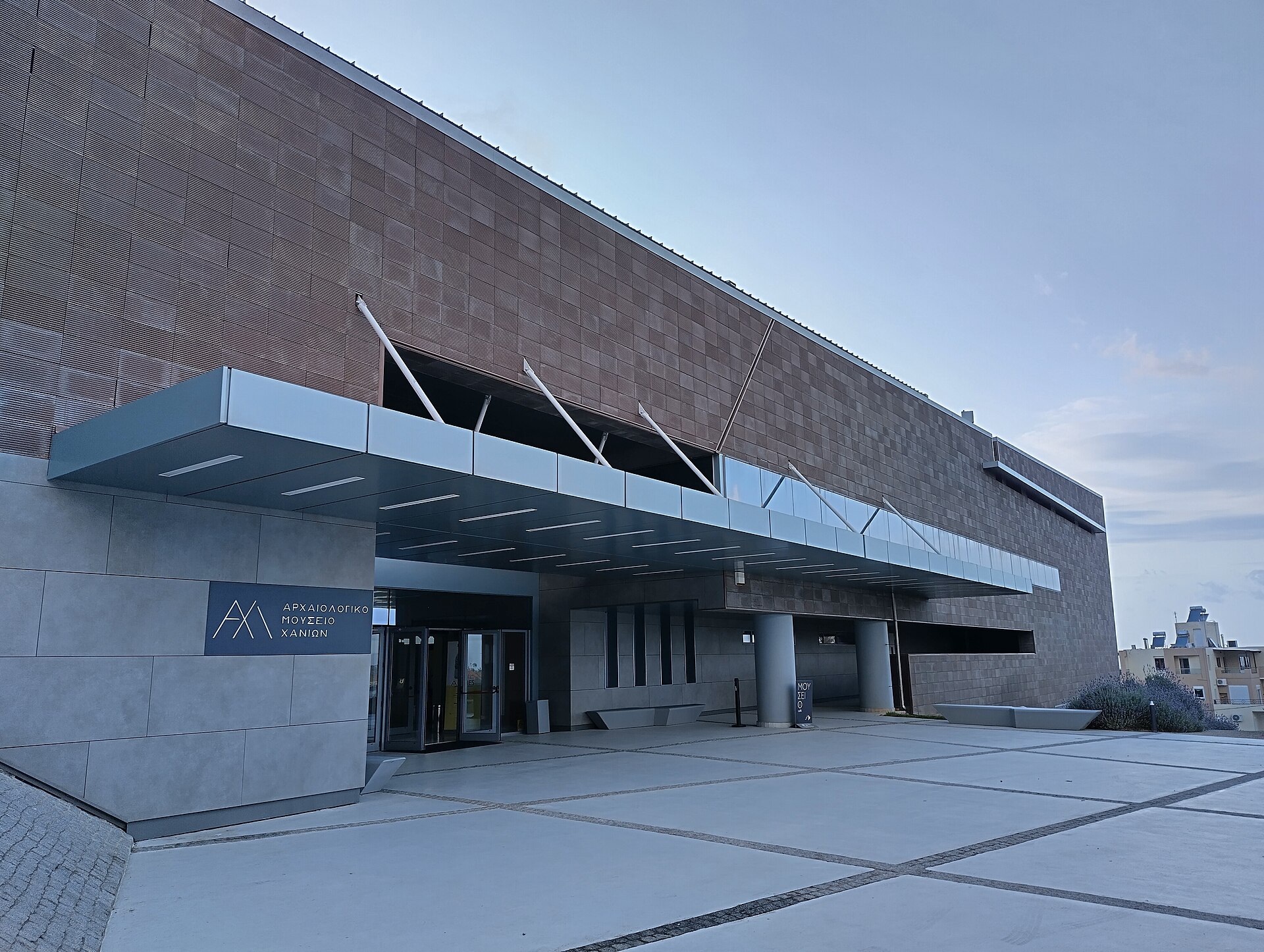
The Archaeological Museum of Chania houses an extensive collection of artifacts recovered from western Crete, documenting the region's history from the Neolithic period through the Roman era. The collection is particularly noted for its significant finds from the ancient city of Kydonia, which stood on the site of modern-day Chania.
Historically housed in the Venetian Church of San Francesco, the museum recently transitioned to a new, modern facility designed to accommodate its growing collection. The exhibits provide a comprehensive overview of Minoan civilization, local pottery, sculpture, and everyday objects that illustrate the cultural evolution of the island over several millennia.
Key Facts
- Materials
- Concrete, Glass, Steel
- Civilization
- Minoan, Greek, Roman
- Accessibility
- Fully wheelchair accessible
- Date(s)
- 2022 (New building)
- Condition
- Active, modern facility
- Original Function
- Archaeological Museum
- Key Figures
- Minos Kalokairinos
Early Collections
1899The museum was originally established in 1899 during the Cretan State period, with its first collections housed in various temporary locations before moving to the Church of San Francesco.
The Venetian Era Building
1963-2020For decades, the museum occupied the 16th-century Venetian monastery of San Francesco. While architecturally significant, the space eventually became insufficient for the expanding archaeological collection.
Modern Expansion
2022-PresentA new, purpose-built museum facility was inaugurated in the Chalepa district of Chania. This state-of-the-art building allows for the display of previously stored artifacts and provides modern conservation and research facilities.
Cultural Significance
The museum serves as the primary repository for the cultural heritage of western Crete. It plays a vital role in preserving the identity of the Chania region by connecting modern residents and visitors to the ancient history of Kydonia and the surrounding landscape.
Beyond its role as a tourist attraction, the institution functions as a center for archaeological research and education, fostering a deeper understanding of the complex interactions between Minoan, Hellenistic, and Roman societies in the Mediterranean.
Interpretive Notes
Scholarly debates and areas of uncertainty
Ongoing research focuses on the extent of Minoan influence in western Crete compared to the central palace centers like Knossos. Scholars continue to analyze the specific trade networks and administrative roles of Kydonia during the Late Minoan period.
Visiting Information
Entry Rules
Open daily except Tuesdays. Tickets can be purchased at the entrance or via the official Ministry of Culture website. Photography is permitted for personal use without flash.
Best Times to Visit
Weekday mornings to avoid cruise ship crowds. The museum is climate-controlled, making it suitable for visits during the hot summer months.
Photography
No flash photography or tripods allowed. Professional photography requires prior authorization from the Hellenic Ministry of Culture.
Preservation Notes
Do not touch artifacts or display cases. Maintain a quiet environment to respect the research and preservation work conducted on-site.
Nearby POIs
0 shownNo nearby POIs listed yet.
Sources & Further Reading
- [1]The Archaeological Museum of Chania: A Guide — Hellenic Ministry of Culture. Archaeological Receipts Fund (2022)View
- [2]Kydonia: The Ancient City of Chania — Maria Andreadaki-Vlazaki. Kapon Editions (2010)
Key Facts
- Materials
- Concrete, Glass, Steel
- Civilization
- Minoan, Greek, Roman
- Accessibility
- Fully wheelchair accessible
- Date(s)
- 2022 (New building)
- Condition
- Active, modern facility
- Original Function
- Archaeological Museum
- Key Figures
- Minos Kalokairinos
Nearby POIs
0 shownNo nearby POIs listed yet.