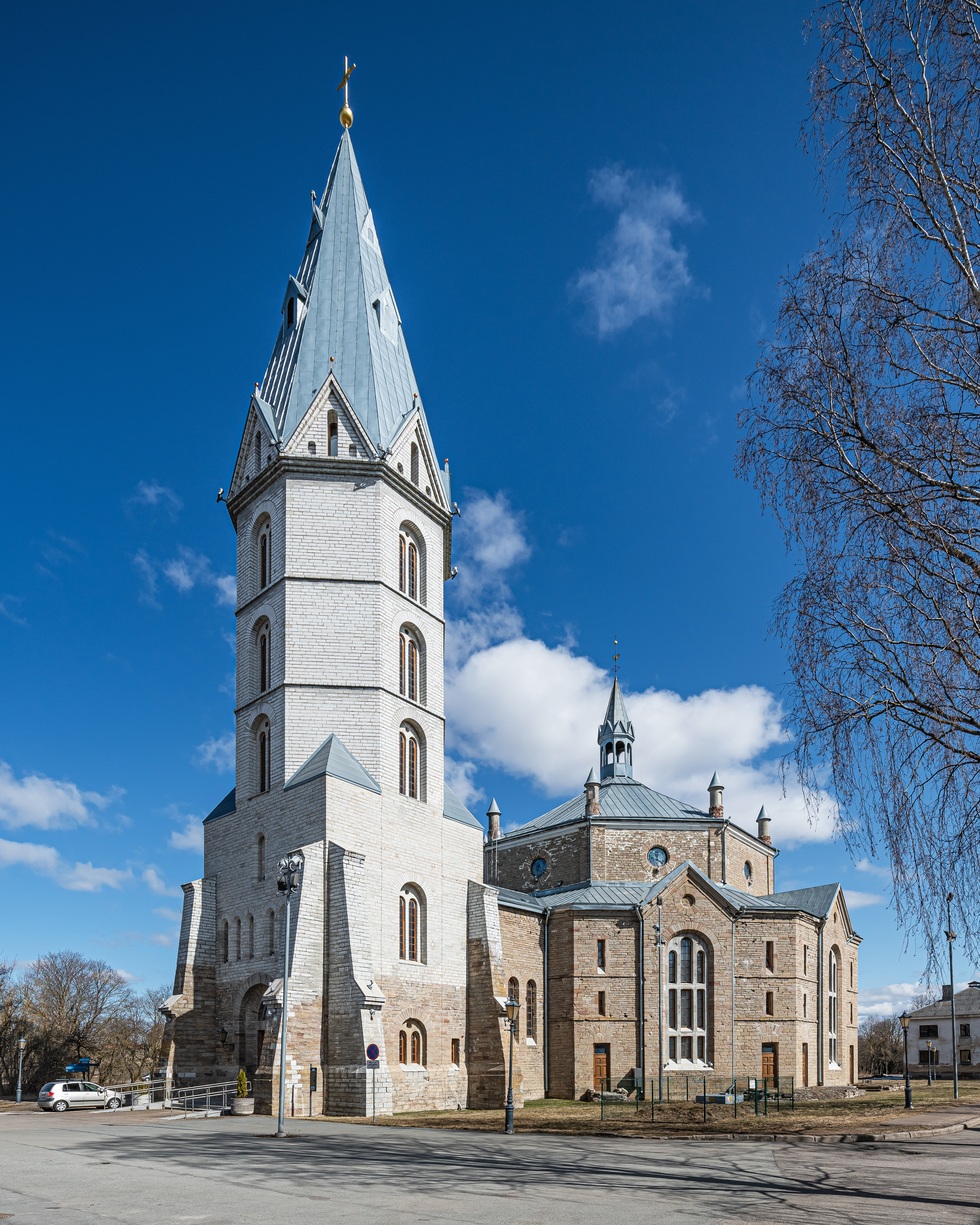
Alexander's Cathedral in Narva, Estonia, is a prominent Neo-Byzantine structure completed in 1884. It was commissioned by the Kreenholm Manufacturing Company to serve the spiritual needs of the thousands of workers employed at the nearby textile mill, which was one of the largest in the world at the time. The cathedral is characterized by its massive central dome and a 60-meter bell tower that dominates the local skyline.
Following significant damage during the Second World War, the building underwent extensive restoration in the late 20th and early 21st centuries. Today, it serves as a functioning Lutheran church and a cultural landmark, reflecting the industrial history and the complex religious heritage of the Narva region.
Key Facts
- Materials
- Red brick, Stone
- Civilization
- Estonian/Russian Imperial
- Accessibility
- Ground level accessible
- Date(s)
- 1881-1884
- Condition
- Restored and active
- Original Function
- Church for Kreenholm Manufacturing Company workers
- Key Figures
- Pavel Alish
Construction and Industrial Context
1881-1884The cathedral was built to accommodate the growing workforce of the Kreenholm textile factory. Designed by architect Pavel Alish, the building was intended to be a grand symbol of the company's prosperity and social responsibility toward its employees.
War and Destruction
1944During the Second World War, the cathedral suffered severe damage during the Battle of Narva. The roof and interior were largely destroyed, and the building remained in a state of ruin for several decades during the Soviet era.
Restoration and Modern Era
1990s-PresentRestoration efforts began in the 1990s following Estonia's restoration of independence. The cathedral was reconsecrated and has since been returned to its role as a center for religious and cultural life in Narva.
Cultural Significance
The cathedral stands as a testament to the industrial boom of the late 19th century in Narva. It represents the intersection of industrial capitalism and religious life, serving as a focal point for the community that built the Kreenholm factory. It remains a symbol of the city's resilience after the near-total destruction of the urban center during the war.
Interpretive Notes
Scholarly debates and areas of uncertainty
There is ongoing discussion regarding the architectural classification of the building, specifically the extent to which it adheres to pure Neo-Byzantine principles versus the eclectic styles prevalent in late 19th-century Baltic architecture.
Visiting Information
Entry Rules
Open to the public. Visitors are expected to maintain a respectful demeanor as it is an active place of worship.
Best Times to Visit
Daylight hours during the summer months to appreciate the exterior architecture and the surrounding park area.
Photography
Personal photography is permitted. Commercial photography requires prior authorization from the parish office.
Preservation Notes
The structure is a protected cultural monument. Visitors should refrain from touching historical interior elements and follow all posted signage regarding restricted areas.
Nearby POIs
8 shownSources & Further Reading
- [1]
- [2]The Kreenholm Manufacturing Company and its Social Infrastructure — Jaan Tamm. Journal of Baltic Heritage (2015)
Key Facts
- Materials
- Red brick, Stone
- Civilization
- Estonian/Russian Imperial
- Accessibility
- Ground level accessible
- Date(s)
- 1881-1884
- Condition
- Restored and active
- Original Function
- Church for Kreenholm Manufacturing Company workers
- Key Figures
- Pavel Alish