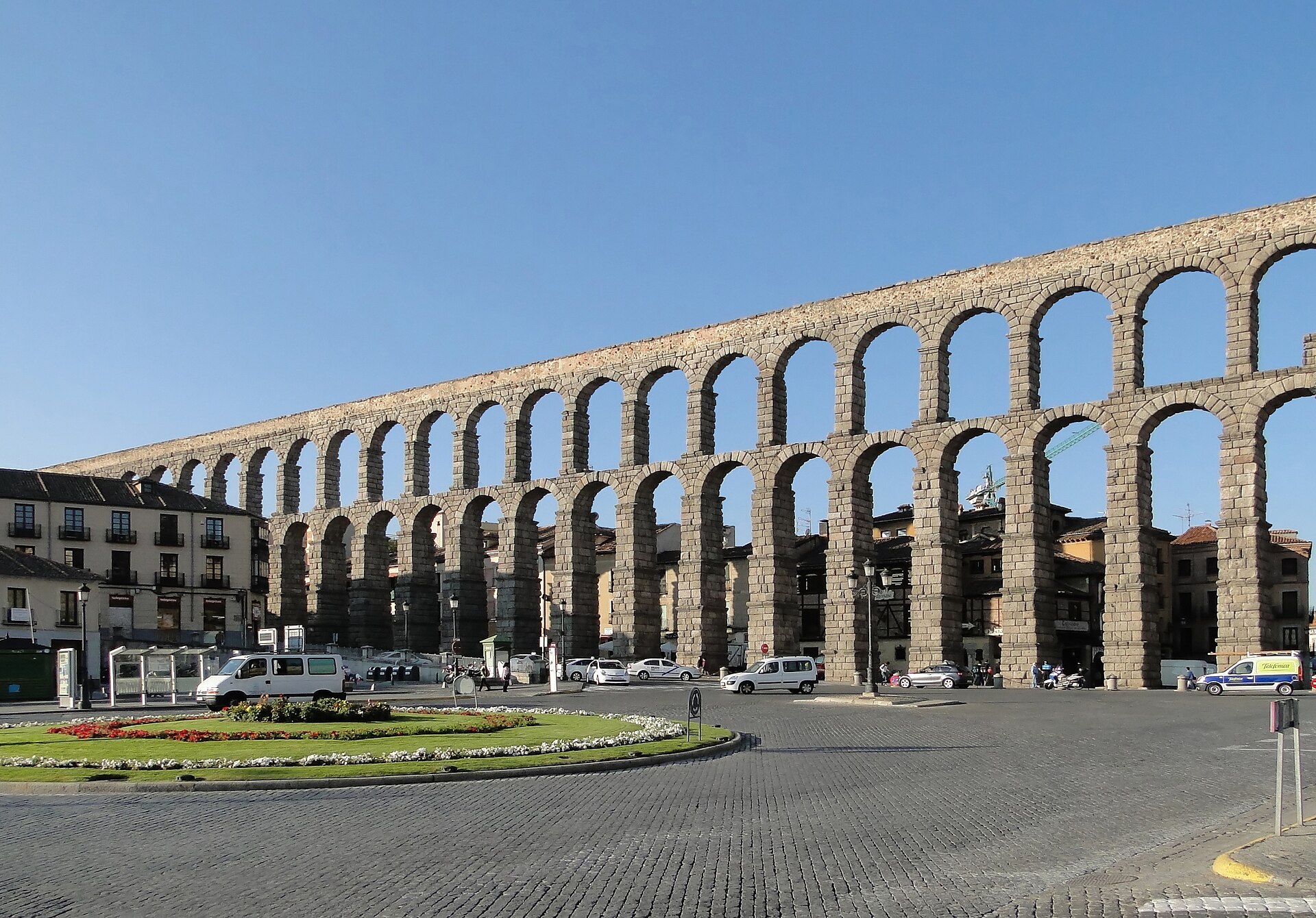
The Aqueduct of Segovia is a Roman-era water conveyance system that transported water from the Frio River to the city of Segovia. Constructed in the late 1st or early 2nd century CE, it is one of the best-preserved elevated Roman aqueducts in existence. The structure spans approximately 818 meters and reaches a maximum height of 28.5 meters, featuring a double-tiered arcade built from granite blocks.
The aqueduct is notable for its dry-stone construction, utilizing no mortar to hold the granite blocks in place. The stability of the structure relies entirely on the precise balance of forces and the weight of the stones. It remained in active service for centuries, supplying water to the city until the late 20th century, and stands as a testament to Roman engineering precision.
Key Facts
- Materials
- Granite
- Civilization
- Roman
- Accessibility
- Public street level, fully accessible
- Date(s)
- Late 1st - Early 2nd century CE
- Condition
- Well-preserved, structural integrity maintained
- Original Function
- Water transport
- Key Figures
- Emperor Domitian, Emperor Trajan
Construction and Engineering
1st-2nd century CEThe aqueduct was built to channel water from the Fuente Fría river in the nearby mountains to the city's upper fortress. The engineering design utilizes a series of 167 arches and a sophisticated gradient to ensure consistent water flow over the uneven terrain.
Medieval Maintenance
11th-15th centuryDuring the Reconquista, parts of the aqueduct were damaged, particularly during the siege of Segovia in 1072. Repairs were undertaken in the 15th century under the direction of Pedro Mesa, who restored several arches using original techniques.
Modern Preservation
20th century - presentThe aqueduct ceased its primary function as a water supply in the 1970s. Since then, the focus has shifted to conservation, including the removal of traffic from beneath the arches and ongoing monitoring of the granite masonry to prevent environmental degradation.
Cultural Significance
The Aqueduct of Segovia is the defining symbol of the city and appears on its coat of arms. It represents the enduring legacy of Roman infrastructure in the Iberian Peninsula and serves as a focal point for local identity and tourism.
Beyond its historical value, the structure is a subject of ongoing study regarding Roman construction techniques and the longevity of dry-stone masonry. It remains a central landmark in the UNESCO-listed Old Town of Segovia.
Interpretive Notes
Scholarly debates and areas of uncertainty
The exact date of construction remains a subject of academic discussion. While traditionally attributed to the reign of Trajan, some archaeological evidence suggests it may have been initiated under Domitian. The lack of an original dedicatory inscription makes definitive dating difficult.
Visiting Information
Entry Rules
The aqueduct is located in a public plaza and is accessible 24 hours a day. There is no entry fee as it is an outdoor monument.
Best Times to Visit
Early morning or late evening to avoid peak tourist crowds and to see the structure illuminated at night.
Photography
No restrictions for personal photography. Commercial use may require municipal permits.
Preservation Notes
Do not climb on the structure or attempt to remove stones. The area is monitored for vibration and pollution levels to protect the granite.
Nearby POIs
0 shownNo nearby POIs listed yet.
Sources & Further Reading
- [1]The Aqueduct of Segovia: A Study in Roman Engineering — Geza Alföldy. Journal of Roman Archaeology (1997)View
- [2]Roman Aqueducts of Spain — A. Trevor Hodge. Duckworth Archaeology (2002)
Key Facts
- Materials
- Granite
- Civilization
- Roman
- Accessibility
- Public street level, fully accessible
- Date(s)
- Late 1st - Early 2nd century CE
- Condition
- Well-preserved, structural integrity maintained
- Original Function
- Water transport
- Key Figures
- Emperor Domitian, Emperor Trajan
Nearby POIs
0 shownNo nearby POIs listed yet.