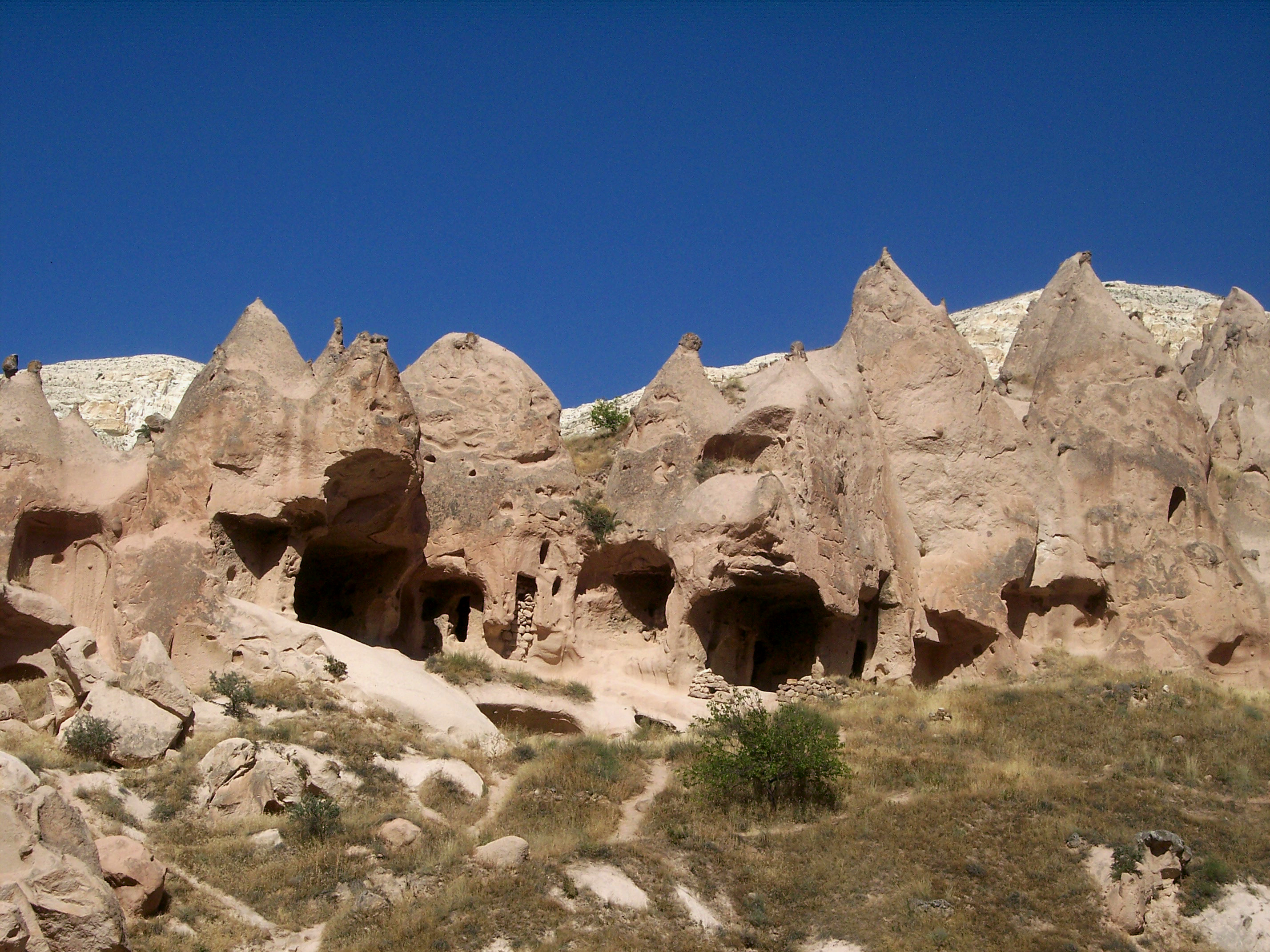
Zelve Monastery is a sprawling cave complex carved into the soft volcanic tuff of the Cappadocia region. Unlike many other monastic sites in the area, Zelve functioned as a multi-layered community where religious life, agriculture, and domestic habitation coexisted within a network of interconnected tunnels, chambers, and rock-cut dwellings.
The site served as a significant religious center from the 9th century, housing various churches decorated with simple red-ochre crosses. It remained an active settlement for centuries, evolving from a monastic retreat into a village that was continuously inhabited until 1952, when residents were relocated due to the risk of rockfalls and erosion.
Key Facts
- Materials
- Volcanic tuff
- Civilization
- Byzantine
- Accessibility
- Steep paths, uneven terrain, not wheelchair accessible
- Date(s)
- 9th century - 20th century
- Condition
- Open-air museum, partially eroded
- Original Function
- Monastic complex and residential village
- Key Figures
Monastic Origins
9th-11th centuryThe site was established as a monastic retreat during the Byzantine period. Monks carved churches, refectories, and living quarters into the valley walls, creating a secluded environment for religious practice.
Village Expansion
12th-19th centuryOver time, the monastic character of the site transitioned into a secular village. The inhabitants expanded the existing cave network, adding granaries, stables, and communal spaces to support a growing agricultural population.
Relocation and Preservation
1952-presentDue to the structural instability of the soft volcanic rock and frequent landslides, the village was evacuated in 1952. The site was subsequently designated as an open-air museum to preserve its unique troglodytic architecture.
Cultural Significance
Zelve represents the unique troglodytic lifestyle of Cappadocia, where the landscape dictated the architectural form. It is a rare example of a site that transitioned from a strictly religious monastic function to a secular village, reflecting the changing social and economic needs of the region over a millennium.