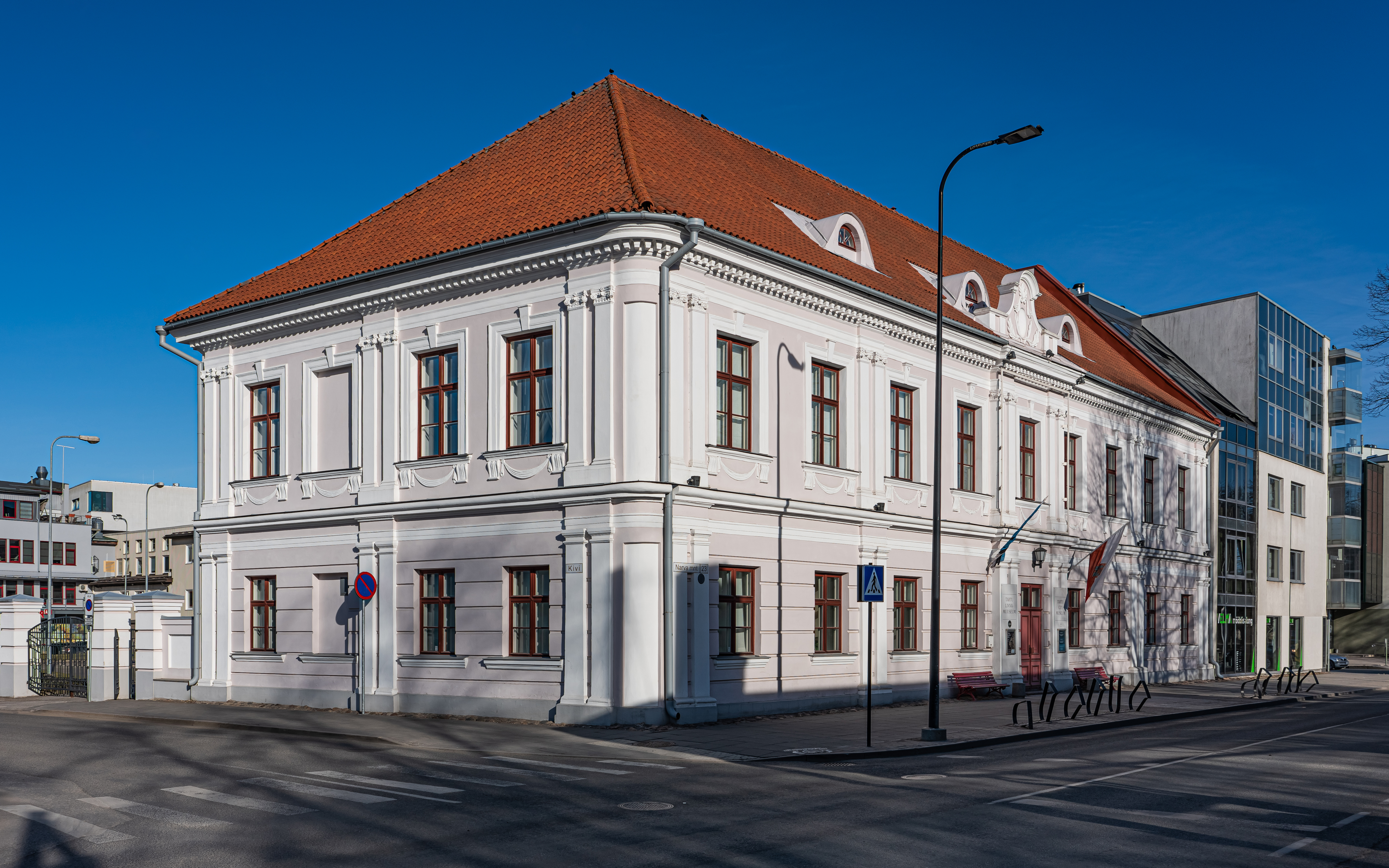
The Tartu City Museum is located in a historic merchant residence dating back to the 18th century. The museum serves as the primary institution for documenting the urban history of Tartu, Estonia's second-largest city, covering its development from the medieval period through the 20th century.
The permanent exhibition explores the social, economic, and cultural evolution of the city. Housed within a well-preserved example of Baltic-German residential architecture, the museum provides context on the city's role as a center of education and trade in the region.
Key Facts
- Materials
- Stone, Brick, Wood
- Civilization
- Estonian
- Accessibility
- Limited accessibility to upper floors
- Date(s)
- 1790s
- Condition
- Restored and active as a museum
- Original Function
- Merchant residence
- Key Figures
- Karl Ernst von Baer
The Merchant House
18th CenturyThe building was constructed as a private residence for a wealthy merchant family during the late 18th century, reflecting the architectural style prevalent in Tartu during the Russian Imperial period.
Establishment of the Museum
1955The Tartu City Museum was officially established in 1955 to preserve the historical artifacts and records of the city, which had suffered significant damage during the Second World War.
Modern Development
20th Century - PresentFollowing the restoration of Estonian independence, the museum expanded its scope to include more comprehensive narratives of 20th-century history, including the Soviet occupation and the subsequent transition to a modern European city.
Cultural Significance
The museum is central to the preservation of Tartu's identity as a 'City of Good Thoughts.' It serves as a repository for the city's civic memory, bridging the gap between the medieval Hanseatic past and the modern academic and cultural life of the city.
Interpretive Notes
Scholarly debates and areas of uncertainty
There is ongoing academic discussion regarding the representation of the Baltic-German legacy within the museum's narrative, specifically balancing the influence of the German-speaking elite with the development of Estonian national consciousness.
Visiting Information
Entry Rules
Open Wednesday to Sunday, 11:00-18:00. Tickets are required for entry. Concessions are available for students and seniors.
Best Times to Visit
Weekday mornings are generally quieter. The museum is a suitable indoor activity during the colder winter months.
Photography
Personal photography is permitted for non-commercial use. Flash photography is prohibited in exhibition halls.
Preservation Notes
The building is a protected architectural monument. Visitors are requested to refrain from touching artifacts and to follow designated paths.
Nearby POIs
7 shownSources & Further Reading
- [1]
- [2]History of Tartu: A Cultural Perspective — M. Tamm. University of Tartu Press (2015)
Key Facts
- Materials
- Stone, Brick, Wood
- Civilization
- Estonian
- Accessibility
- Limited accessibility to upper floors
- Date(s)
- 1790s
- Condition
- Restored and active as a museum
- Original Function
- Merchant residence
- Key Figures
- Karl Ernst von Baer