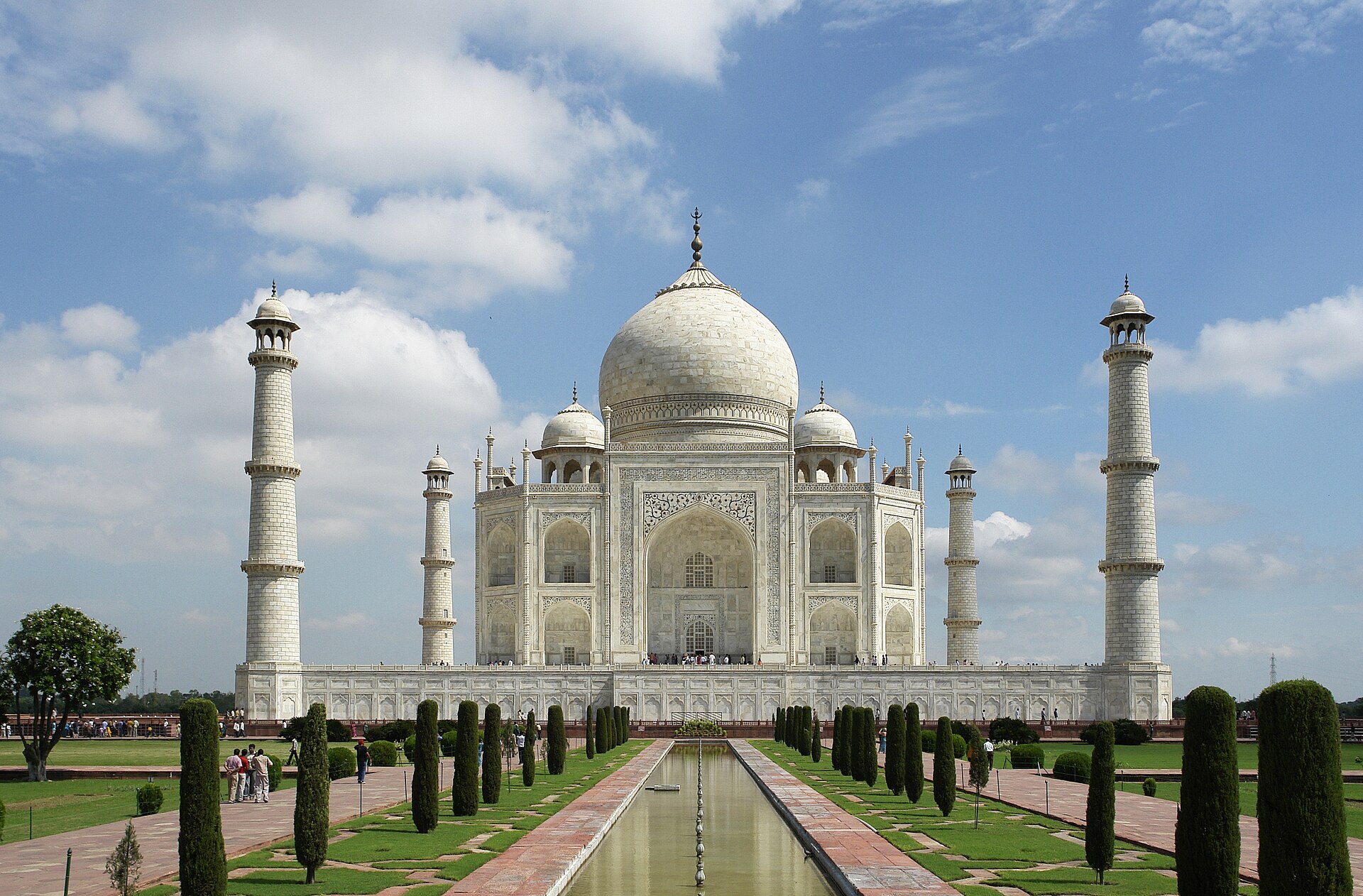
The Taj Mahal is a white marble mausoleum located in Agra, India, commissioned by Mughal emperor Shah Jahan in 1632 CE to house the tomb of his wife Mumtaz Mahal. The structure combines Islamic, Persian, Ottoman Turkish, and Indian architectural styles and is renowned for its symmetrical design and intricate marble inlay work. Construction was largely completed by 1648 CE, with surrounding gardens and ancillary structures finished around 1653 CE. The site includes a main gateway, a mosque, a guest house, and extensive gardens along the Yamuna River. The Taj Mahal is widely recognized as a symbol of India’s rich cultural heritage and Mughal architectural achievement.
Key Facts
- Materials
- White marble, Red sandstone, Semi-precious stones
- Civilization
- Mughal Empire
- Accessibility
- Wheelchair accessible in most areas; ramps available
- Date(s)
- 1632-1653 CE
- Condition
- Well-preserved; UNESCO World Heritage Site
- Original Function
- Mausoleum for Mumtaz Mahal
- Key Figures
- Shah Jahan, Mumtaz Mahal, Ustad Ahmad Lahauri
Commissioning and Early Construction
1632-1648 CEShah Jahan commissioned the Taj Mahal to honor his wife Mumtaz Mahal after her death in 1631. Construction began in 1632 under the supervision of chief architect Ustad Ahmad Lahauri and involved thousands of artisans and laborers.
Completion and Expansion
1648-1653 CEWhile the main mausoleum was completed by 1648, additional structures, including the surrounding gardens, mosque, and guest house, were finished by 1653. The site was carefully planned for symmetry and spiritual symbolism, following Mughal architectural principles.
Post-Mughal Period
18th-19th centuriesThe Taj Mahal suffered neglect and some damage during later periods of political instability, particularly during British colonial rule, when parts of the gardens were altered and the site faced the threat of looting.
Modern Preservation
20th century - presentThe Indian government, along with UNESCO, implemented preservation programs to maintain the structure’s integrity and marble whiteness. Today, the Taj Mahal attracts millions of visitors annually and continues to be a symbol of India’s cultural and architectural heritage.
Cultural Significance
The Taj Mahal represents Mughal imperial power, religious devotion, and the fusion of multiple architectural traditions. It is both a mausoleum and a symbol of love, commemorating Mumtaz Mahal’s memory and serving as a testament to Mughal artistic achievement. For India, the Taj Mahal is a national symbol and a focal point of tourism, cultural identity, and heritage preservation. It is frequently used in educational, artistic, and diplomatic contexts to convey India’s historical legacy.
Interpretive Notes
Scholarly debates and areas of uncertainty
Debates focus on the extent of European influence on Mughal architectural elements and the identity of individual architects. Conservationists also discuss the impact of environmental pollution and tourism on marble discoloration and structural integrity.
Visiting Information
Entry Rules
Ticketed entry required. Visitors must enter via designated gates, follow security checks, and stay on marked paths within the mausoleum complex.
Best Times to Visit
Early morning and late afternoon for cooler temperatures and fewer crowds. Avoid peak tourist seasons in winter and during Indian national holidays.
Photography
Personal photography allowed. Tripods, flash photography inside the main mausoleum, and drones require special permits.
Preservation Notes
Do not touch or climb on marble surfaces. Shoes must be removed in certain areas. Follow all guidelines to protect the marble inlay and gardens. Regular maintenance and cleaning continue to preserve the site.
Nearby POIs
0 shownNo nearby POIs listed yet.
Sources & Further Reading
- [1]
- [2]Taj Mahal: Passion and Genius at the Heart of the Moghul Empire — Gail Minault. Oxford University Press (2012)
- [3]The Taj Mahal — Ebba Koch. Prestel Publishing (2006)
Key Facts
- Materials
- White marble, Red sandstone, Semi-precious stones
- Civilization
- Mughal Empire
- Accessibility
- Wheelchair accessible in most areas; ramps available
- Date(s)
- 1632-1653 CE
- Condition
- Well-preserved; UNESCO World Heritage Site
- Original Function
- Mausoleum for Mumtaz Mahal
- Key Figures
- Shah Jahan, Mumtaz Mahal, Ustad Ahmad Lahauri
Nearby POIs
0 shownNo nearby POIs listed yet.