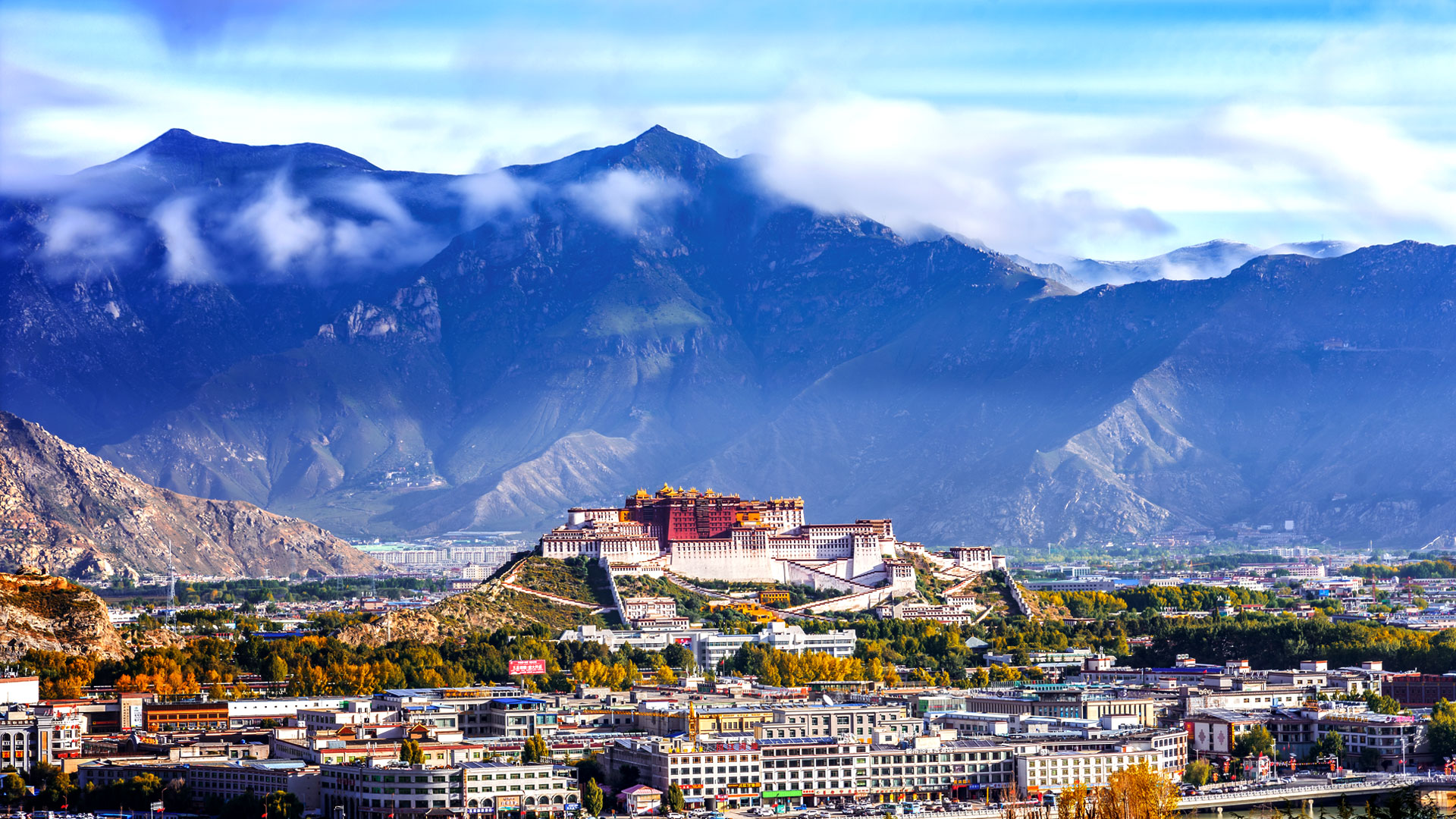
The Potala Palace is a massive fortress-palace complex located on Marpo Ri (Red Hill) in Lhasa, Tibet. Originally constructed in the 7th century by Songtsen Gampo, the current structure was primarily built between 1645 and 1694 under the direction of the Fifth Dalai Lama, Lobsang Gyatso. It served as the winter residence of the Dalai Lamas and the center of the Tibetan government until the 14th Dalai Lama fled to India in 1959.
The complex is divided into the White Palace, which served as the administrative and residential quarters, and the Red Palace, which is dedicated to religious study and Buddhist prayer. It houses thousands of rooms, including the gilded burial stupas of past Dalai Lamas, extensive mural cycles, and a vast collection of Tibetan Buddhist scriptures and artifacts. The site remains a profound symbol of Tibetan Buddhism and traditional architecture.
Key Facts
- Materials
- Stone, Earth, Wood, Copper, Gold
- Civilization
- Tibetan
- Accessibility
- High altitude, requires significant stair climbing
- Date(s)
- 1645-1694
- Condition
- Well-preserved, functioning as a museum and religious site
- Original Function
- Winter residence of the Dalai Lama and administrative center
- Key Figures
- Songtsen Gampo, Fifth Dalai Lama, Thirteenth Dalai Lama
Early Foundations
7th CenturyThe site was first established by King Songtsen Gampo, who built a palace on the hill to welcome his bride, Princess Wencheng of the Tang Dynasty. Little of this original structure remains today.
Reconstruction and Expansion
1645-1694The Fifth Dalai Lama initiated the construction of the current Potala Palace. The White Palace was completed in 1648, and the Red Palace was added later to house the remains of the Fifth Dalai Lama and serve as a religious center.
Modern Era and Preservation
1959-PresentFollowing the 1959 Tibetan uprising, the palace was converted into a museum. It was inscribed as a UNESCO World Heritage site in 1994, and extensive restoration projects have been conducted to preserve its structural integrity and interior murals.
Cultural Significance
The Potala Palace is the preeminent symbol of Tibetan Buddhism and the historical seat of the Dalai Lama. It represents the synthesis of religious and political authority in traditional Tibet, serving as a repository for the nation's spiritual and cultural heritage. Its architectural design, blending fortress-like defensive walls with ornate religious halls, reflects the unique environmental and cultural context of the Tibetan Plateau.
Interpretive Notes
Scholarly debates and areas of uncertainty
Debates persist regarding the extent of historical modifications during the 20th century and the balance between its role as a state-managed museum and its ongoing function as a living religious site for Tibetan pilgrims.
Visiting Information
Entry Rules
Entry is strictly regulated with a daily visitor quota. Tickets must be booked in advance, often through authorized travel agencies. Visitors must present valid identification and pass through security checkpoints. Modest dress is required.
Best Times to Visit
Late spring or early autumn to avoid extreme winter cold and the peak summer monsoon season. Early morning visits are recommended to manage the high-altitude exertion required for the climb.
Photography
Photography is strictly prohibited inside the chapels and the Red Palace. Exterior photography is generally permitted.
Preservation Notes
The site is fragile due to its age and high-altitude location. Visitors must stay on designated paths, avoid touching murals or artifacts, and be mindful of the limited oxygen levels.
Nearby POIs
0 shownNo nearby POIs listed yet.
Key Facts
- Materials
- Stone, Earth, Wood, Copper, Gold
- Civilization
- Tibetan
- Accessibility
- High altitude, requires significant stair climbing
- Date(s)
- 1645-1694
- Condition
- Well-preserved, functioning as a museum and religious site
- Original Function
- Winter residence of the Dalai Lama and administrative center
- Key Figures
- Songtsen Gampo, Fifth Dalai Lama, Thirteenth Dalai Lama
Nearby POIs
0 shownNo nearby POIs listed yet.