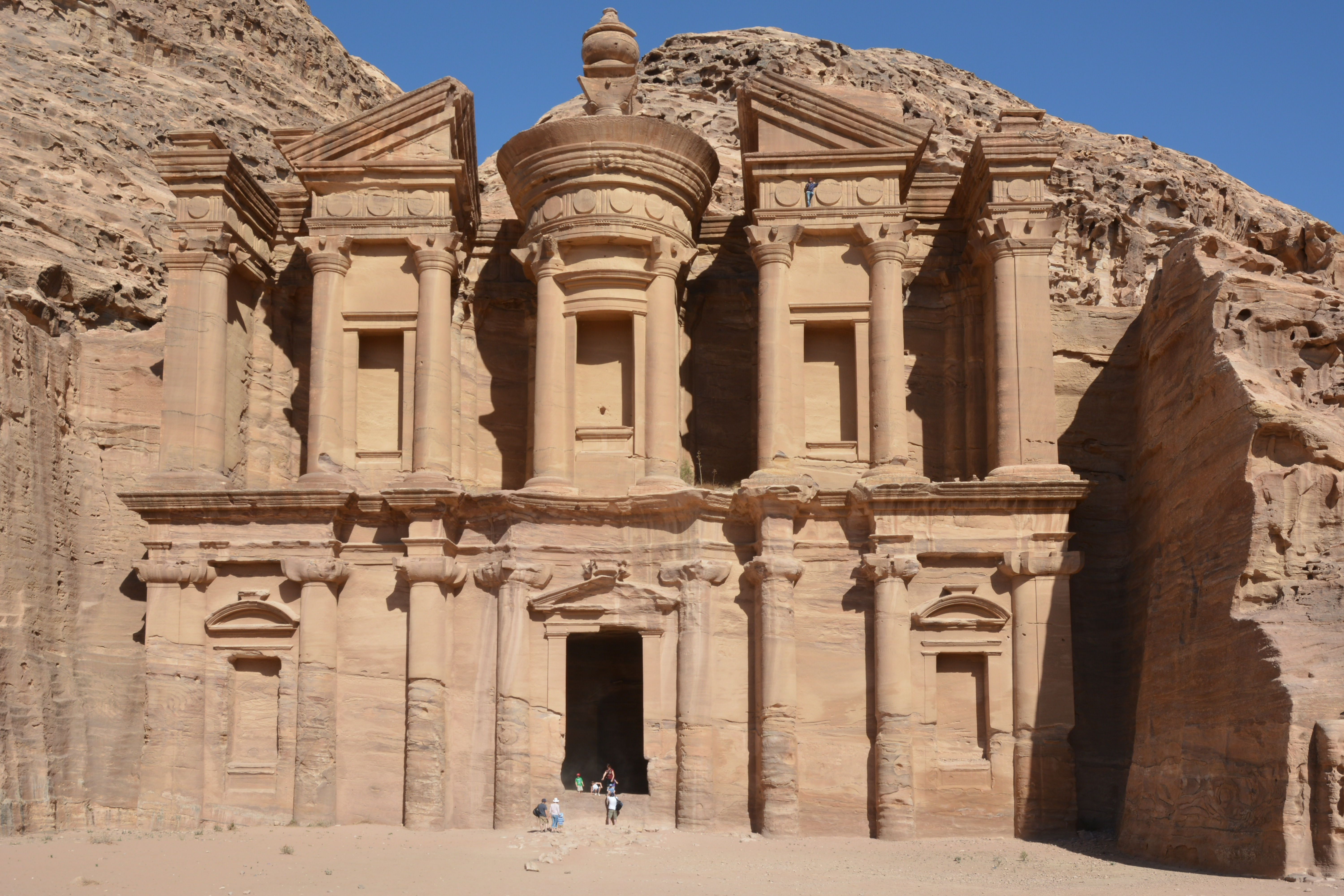
Petra is a historical and archaeological city in southern Jordan, famous for its rock-cut architecture and water conduit system. Established as the capital city of the Nabataeans, it became a major regional trading hub due to its strategic position at the crossroads of ancient incense and spice routes connecting Arabia, Egypt, and the Mediterranean.
The site is renowned for its elaborate facades carved directly into vibrant red, white, and pink sandstone cliffs. The most iconic structure, Al-Khazneh (The Treasury), serves as a testament to the sophisticated engineering and artistic synthesis of Nabataean, Hellenistic, and Roman architectural styles that define the city.
Key Facts
- Materials
- Sandstone, Limestone
- Civilization
- Nabataean
- Accessibility
- Limited; involves significant walking on uneven terrain
- Date(s)
- 4th century BCE - 1st century CE
- Condition
- Extensive archaeological ruins, partially excavated
- Original Function
- Capital city and trade hub
- Key Figures
- Aretas IV Philopatris, Johann Ludwig Burckhardt
Nabataean Rise
4th century BCE - 1st century CEThe Nabataeans, a nomadic Arab people, settled in the area and transformed it into a prosperous capital. They mastered water management in the arid desert, allowing the city to flourish as a center for trade.
Roman Annexation
106 CE - 395 CEThe Roman Empire annexed the Nabataean Kingdom, renaming the province Arabia Petraea. During this time, the city saw the construction of a colonnaded street and other Roman-style civic buildings.
Byzantine Era and Decline
4th century - 7th centuryAs Christianity spread, several structures were converted into churches. However, a major earthquake in 363 CE and shifting trade routes led to a gradual decline in the city's prominence.
Rediscovery
1812After centuries of being known only to local Bedouin tribes, the site was introduced to the Western world by Swiss explorer Johann Ludwig Burckhardt, who disguised himself to gain entry.
Cultural Significance
Petra represents the pinnacle of Nabataean cultural achievement and their unique ability to adapt to extreme desert environments. It serves as a symbol of Jordanian national identity and remains one of the most significant archaeological sites globally, reflecting the intersection of diverse ancient cultures.
Its status as one of the New 7 Wonders of the World has solidified its role as a global cultural icon, drawing millions of visitors and highlighting the importance of preserving desert architectural heritage against environmental erosion.
Interpretive Notes
Scholarly debates and areas of uncertainty
The exact function of the 'Treasury' (Al-Khazneh) remains a subject of debate; while traditionally thought to be a royal tomb, some scholars suggest it may have functioned as a temple or a repository for archives. Additionally, the extent of Roman influence on Nabataean urban planning versus indigenous development continues to be analyzed.
Visiting Information
Entry Rules
Open daily from 6:00 AM to 6:00 PM in summer and 6:00 AM to 4:00 PM in winter. Tickets are required for entry. Visitors are encouraged to wear comfortable walking shoes and carry adequate water.
Best Times to Visit
Spring (March to May) and Autumn (September to November) offer the most temperate weather for exploring the extensive site.
Photography
Personal photography is permitted. Commercial photography requires prior authorization from the Petra Archaeological Park authorities.
Preservation Notes
Do not climb on or touch the rock-cut facades, as the sandstone is highly susceptible to erosion and human-induced damage. Stay on designated paths to protect archaeological remains.
Nearby POIs
0 shownNo nearby POIs listed yet.
Key Facts
- Materials
- Sandstone, Limestone
- Civilization
- Nabataean
- Accessibility
- Limited; involves significant walking on uneven terrain
- Date(s)
- 4th century BCE - 1st century CE
- Condition
- Extensive archaeological ruins, partially excavated
- Original Function
- Capital city and trade hub
- Key Figures
- Aretas IV Philopatris, Johann Ludwig Burckhardt
Nearby POIs
0 shownNo nearby POIs listed yet.