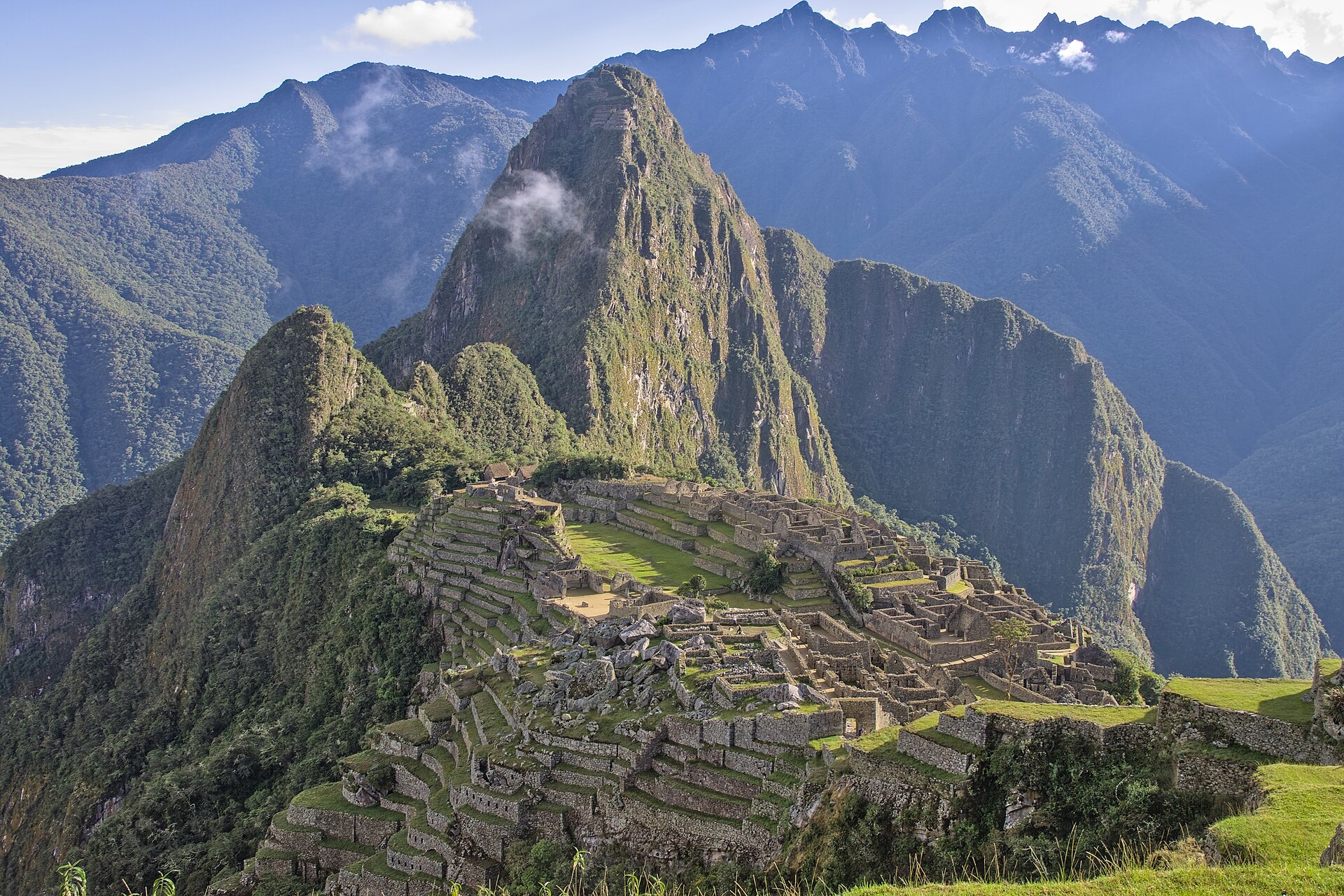
Machu Picchu is a 15th-century Inca citadel located in the Andes Mountains of Peru, approximately 2,430 meters above sea level. Built during the reign of Emperor Pachacuti, it is widely considered one of the most significant archaeological sites of the Inca Empire. The site consists of agricultural terraces, ceremonial plazas, temples, and residential structures constructed with precisely cut stone masonry. Abandoned in the 16th century during the Spanish conquest, it remained largely unknown to the outside world until its international scientific recognition in 1911.
Key Facts
- Elevation
- 2,430 meters
- Civilization
- Inca
- Rediscovered By
- Hiram Bingham (1911 scientific expedition)
- Condition
- Well preserved with ongoing conservation management
- Construction Dates
- Mid-15th century
- Architectural Features
- Ashlar stonework, Agricultural terraces, Temple of the Sun, Intihuatana stone
Inca Construction
15th centuryMachu Picchu was constructed under the Inca emperor Pachacuti as a royal estate or sacred ceremonial site. Its strategic mountain location provided natural defense and spiritual significance.
Abandonment
16th centuryThe site was likely abandoned during the Spanish conquest of the Inca Empire, though it was never discovered or destroyed by Spanish forces.
Scientific Recognition
1911The site gained international attention after American historian Hiram Bingham led an expedition that documented and publicized its ruins.
Modern Preservation
20th-21st centuriesMachu Picchu became a major global tourist destination and was designated a UNESCO World Heritage Site in 1983. Strict visitor regulations were introduced to protect the fragile archaeological environment.
Cultural Significance
Machu Picchu is one of the most iconic symbols of the Inca civilization and Andean cultural heritage. It demonstrates advanced Inca engineering, astronomy, and landscape integration. It is widely regarded as one of the New Seven Wonders of the World and remains central to Peruvian national identity and global heritage tourism.
Interpretive Notes
Scholarly debates and areas of uncertainty
Scholars debate the precise function of Machu Picchu, whether primarily a royal estate, sacred religious site, administrative center, or a combination of these roles. Discussions also focus on conservation challenges posed by mass tourism and environmental pressures.
Visiting Information
Entry Rules
Advance ticket purchase required. Daily visitor quotas enforced. Entry allowed only during assigned time slots and via designated circuits. Certified guide required for certain routes.
Best Times to Visit
Early morning for clearer skies and fewer crowds. Dry season (May–September) offers more stable weather conditions.
Photography
Photography permitted. Tripods, drones, and professional equipment require special authorization.
Preservation Notes
Stay on designated paths. Do not touch or climb restricted structures. Strict environmental regulations are enforced to preserve the site.
Nearby POIs
4 shownSources & Further Reading
- [1]
- [2]Machu Picchu: Unveiling the Mystery of the Incas — Hiram Bingham. Yale University Press (1948)
Key Facts
- Elevation
- 2,430 meters
- Civilization
- Inca
- Rediscovered By
- Hiram Bingham (1911 scientific expedition)
- Condition
- Well preserved with ongoing conservation management
- Construction Dates
- Mid-15th century
- Architectural Features
- Ashlar stonework, Agricultural terraces, Temple of the Sun, Intihuatana stone