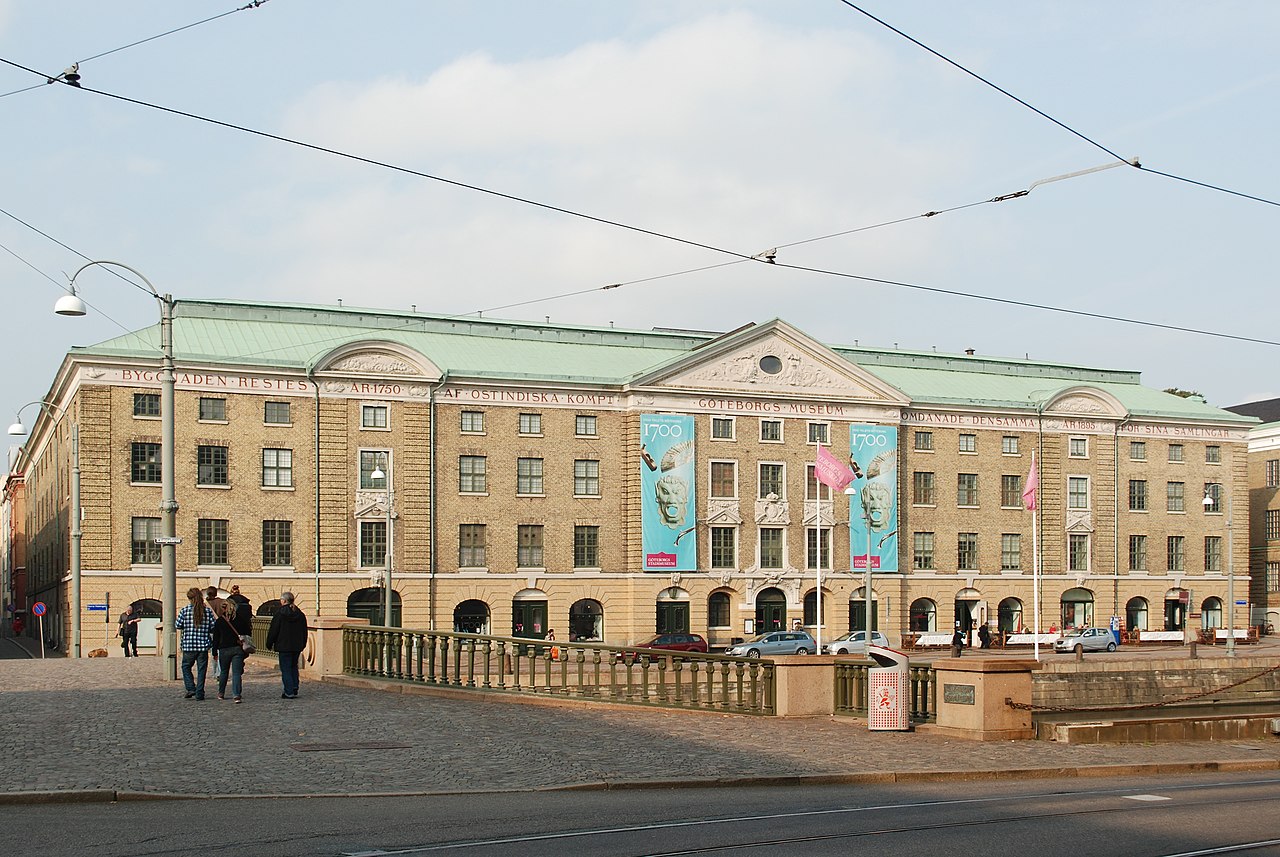
The Gothenburg City Museum is housed in the East India House, a historic building constructed in 1750 to serve as the headquarters for the Swedish East India Company. The museum focuses on the cultural history of Gothenburg and the surrounding region, spanning from the Viking Age to the contemporary era.
The permanent collections include extensive documentation of the Swedish East India Company's maritime trade, as well as archaeological findings from the local area. The building itself is considered one of the most significant 18th-century structures in Gothenburg, reflecting the city's historical role as a major center for international commerce.
Key Facts
- Materials
- Brick, Stone
- Civilization
- Swedish
- Accessibility
- Fully wheelchair accessible
- Date(s)
- 1750
- Condition
- Well-preserved, active museum
- Original Function
- Headquarters of the Swedish East India Company
- Key Figures
- Henrik König
The East India Company Era
18th centuryThe building was commissioned by the Swedish East India Company to serve as their warehouse and administrative hub. It was designed by architect Bengt Wilhelm Carlberg and completed in 1750, symbolizing the wealth generated by Swedish trade with China.
Transition to Museum
19th-20th centuryFollowing the dissolution of the East India Company, the building served various civic functions. In the early 20th century, it was repurposed to house the city's growing historical and archaeological collections, officially becoming the Gothenburg City Museum.
Modern Preservation
21st centuryThe museum continues to operate as a central cultural institution, undergoing periodic renovations to modernize its exhibition spaces while preserving the architectural integrity of the 18th-century structure.
Cultural Significance
The museum serves as the primary repository for Gothenburg's urban history. It plays a vital role in regional identity by connecting modern residents to the city's maritime heritage and its historical status as a global trading port.
Interpretive Notes
Scholarly debates and areas of uncertainty
Discussions often center on the ethical implications of the Swedish East India Company's trade practices and the colonial-era economic structures that the museum's collection represents.
Visiting Information
Entry Rules
Open Tuesday through Sunday. Admission is ticketed; tickets are valid for multiple museums within the Gothenburg museum network.
Best Times to Visit
Weekdays during the morning hours to avoid weekend crowds.
Photography
Personal photography is permitted without flash. Tripods require prior authorization.
Preservation Notes
Visitors are requested to refrain from touching artifacts and to maintain a quiet environment in exhibition galleries.
Nearby POIs
9 shownSources & Further Reading
- [1]Göteborgs Stadsmuseum: History of the East India House — Gothenburg City Museum. Gothenburg City Museum Official Archives (2020)View
- [2]The Swedish East India Company: Trade and Culture — Lars E. Berg. Nordic Academic Press (2015)
Key Facts
- Materials
- Brick, Stone
- Civilization
- Swedish
- Accessibility
- Fully wheelchair accessible
- Date(s)
- 1750
- Condition
- Well-preserved, active museum
- Original Function
- Headquarters of the Swedish East India Company
- Key Figures
- Henrik König