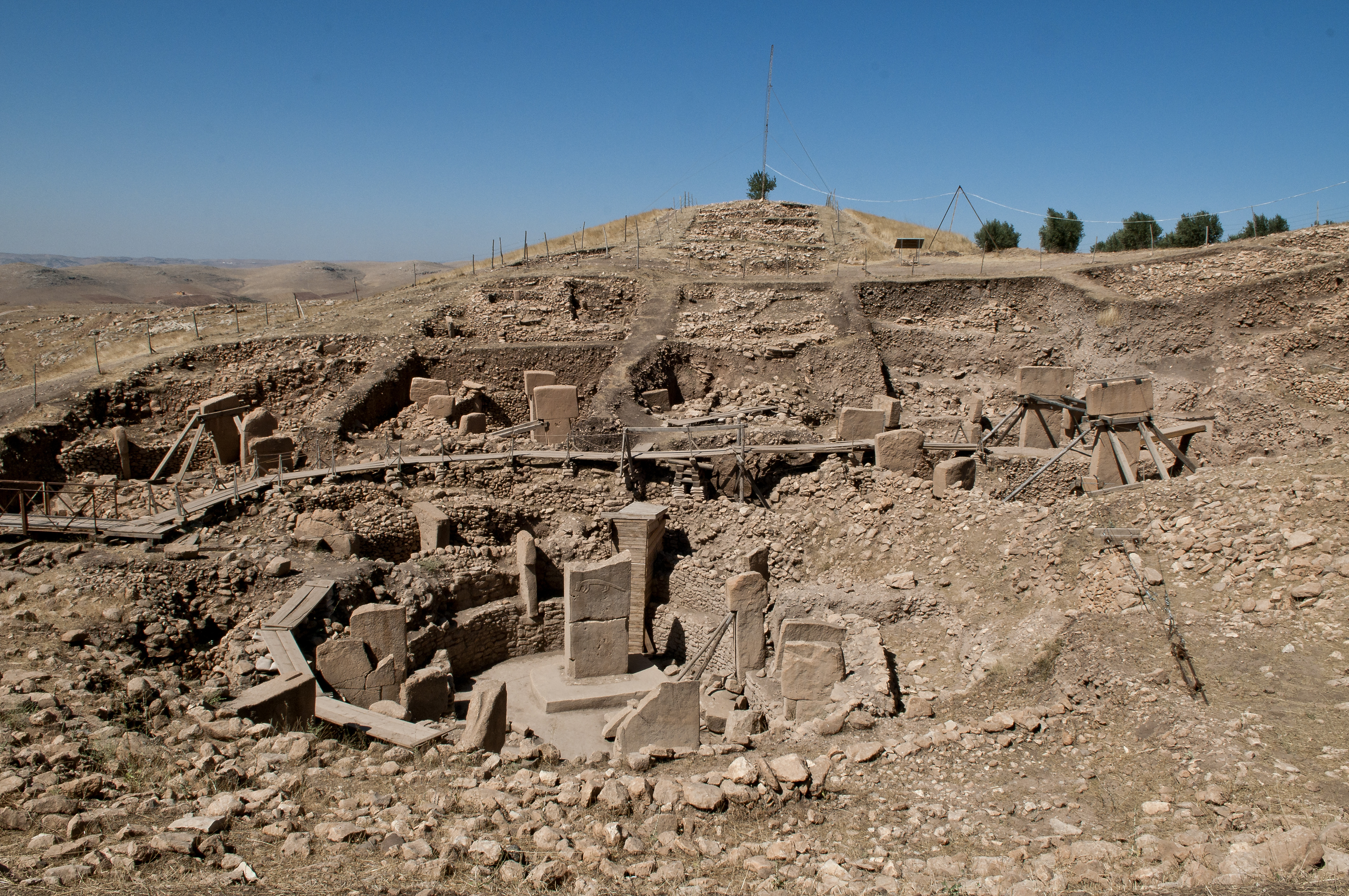
Göbekli Tepe is an archaeological site located in the Germuş Mountains of southeastern Anatolia, Turkey. Dating to the 10th–8th millennium BCE, it consists of a series of circular enclosures containing massive T-shaped limestone pillars, some reaching up to 5.5 meters in height. Many of these monoliths are decorated with intricate bas-reliefs of animals, including foxes, snakes, boars, and cranes, as well as abstract symbols.
The site is widely recognized as the world's oldest known monumental temple complex, predating the invention of agriculture, pottery, and writing. Its construction by hunter-gatherer societies challenges traditional archaeological models that suggest complex social organization and monumental architecture only emerged after the transition to sedentary farming communities.
Key Facts
- Materials
- Limestone, Dry stone
- Civilization
- Pre-Pottery Neolithic
- Accessibility
- Accessible via shuttle from visitor center; wooden walkways provided
- Date(s)
- c. 9500–8000 BCE
- Condition
- Active archaeological excavation and protected site
- Original Function
- Cultic or ritual sanctuary
- Key Figures
- Klaus Schmidt
Early Discovery
1963The site was first noted during a survey by the University of Istanbul and the University of Chicago, though its significance was not immediately recognized, and it was initially dismissed as a medieval cemetery.
Excavation and Recognition
1994–2014German archaeologist Klaus Schmidt identified the site as a Neolithic sanctuary. Excavations revealed the complex nature of the enclosures, proving that hunter-gatherers were capable of organizing the labor required for such massive construction projects.
Modern Preservation
2018–PresentGöbekli Tepe was inscribed as a UNESCO World Heritage Site in 2018. A permanent roof structure was installed to protect the fragile limestone carvings from environmental degradation, and the site continues to be a focal point for Neolithic research.
Cultural Significance
Key Facts
- Materials
- Limestone, Dry stone
- Civilization
- Pre-Pottery Neolithic
- Accessibility
- Accessible via shuttle from visitor center; wooden walkways provided