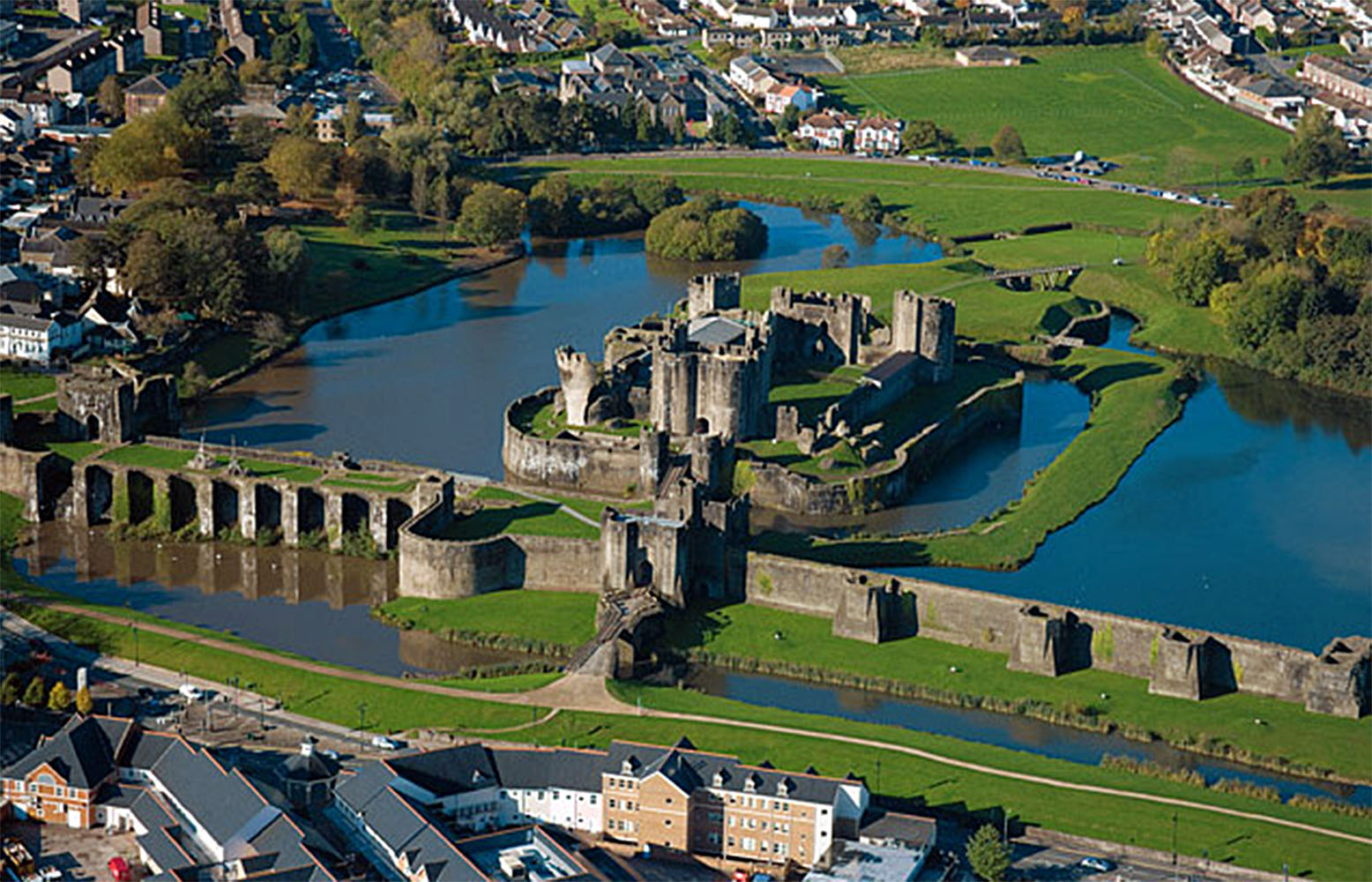
Caerphilly Castle is a 13th-century fortification located in South Wales, commissioned by Gilbert de Clare, 6th Earl of Gloucester, as part of his campaign to secure the lordship of Glamorgan. It is recognized as one of the most significant examples of concentric castle design in Britain, featuring an extensive system of water defenses and massive gatehouses that served as a strategic deterrent against Welsh resistance.
The site is notable for its innovative military architecture, including the use of a 'gatehouse-keep' design and a sophisticated series of dams and moats that flooded the surrounding landscape. Despite suffering damage during the English Civil War, the castle remains largely intact and is currently managed by Cadw, the Welsh historic environment service.
Key Facts
- Materials
- Pennant sandstone, Limestone
- Civilization
- Anglo-Norman
- Accessibility
- Partial accessibility; some areas involve uneven terrain and stairs
- Date(s)
- 1268–1290 CE
- Condition
- Well-preserved, managed historic site
- Original Function
- Military fortification and administrative center
- Key Figures
- Gilbert de Clare, Llywelyn ap Gruffudd, Hugh le Despenser
Origins and Construction
1268–1271Gilbert de Clare began construction in 1268 to counter the influence of Llywelyn ap Gruffudd, the Prince of Wales. The rapid building pace led to immediate conflict, resulting in the site being besieged and partially destroyed by Welsh forces shortly after its inception.
Expansion and Consolidation
1271–1320Following the initial conflict, de Clare resumed construction, incorporating advanced concentric defenses. By the early 14th century, the castle had become a primary administrative hub for the de Clare family and later the Despenser family, who further fortified the site.
Decline and Civil War
15th–17th centuryThe castle fell into disrepair during the 15th century as its military utility waned. During the English Civil War, the structure was intentionally damaged—'slighted'—to prevent it from being used as a military stronghold, leading to the characteristic lean of the southeast tower.
Restoration and Modern Era
19th century–presentThe 3rd Marquess of Bute undertook extensive restoration work in the late 19th century to stabilize the ruins. Today, the site is maintained by Cadw, which oversees ongoing preservation and public interpretation efforts.
Cultural Significance
Caerphilly Castle serves as a primary symbol of the Anglo-Norman conquest of Wales and the complex power dynamics between the Marcher Lords and the native Welsh princes. It is a landmark of medieval military engineering, illustrating the transition toward more complex, multi-layered defensive systems in the British Isles.
In contemporary Welsh culture, the castle is a focal point for local heritage and tourism. Its iconic leaning tower has become a recognizable feature of the Welsh landscape, frequently used in educational contexts to demonstrate the impact of 17th-century slighting techniques.
Interpretive Notes
Scholarly debates and areas of uncertainty
There is ongoing academic discussion regarding the primary intent of the water defenses; while traditionally viewed as purely defensive, some historians argue they also served as a display of wealth and lordship, intended to intimidate local rivals through the sheer scale of the landscape modification.
Visiting Information
Entry Rules
Open daily. Tickets can be purchased at the entrance or online via the Cadw website. Visitors are advised to check seasonal opening hours before arrival.
Best Times to Visit
Spring and early autumn offer the best conditions for exploring the extensive outdoor grounds and water defenses. Weekdays outside of school holidays are recommended for a quieter experience.
Photography
Personal photography is permitted throughout the site. Commercial photography requires prior written permission from Cadw.
Preservation Notes
The site contains fragile masonry and uneven surfaces. Visitors are requested to stay on marked paths and refrain from climbing on the walls or historic structures.
Nearby POIs
5 shownSources & Further Reading
- [1]
- [2]The Castles of Wales — John R. Kenyon. University of Wales Press (2010)
Key Facts
- Materials
- Pennant sandstone, Limestone
- Civilization
- Anglo-Norman
- Accessibility
- Partial accessibility; some areas involve uneven terrain and stairs
- Date(s)
- 1268–1290 CE
- Condition
- Well-preserved, managed historic site
- Original Function
- Military fortification and administrative center
- Key Figures
- Gilbert de Clare, Llywelyn ap Gruffudd, Hugh le Despenser