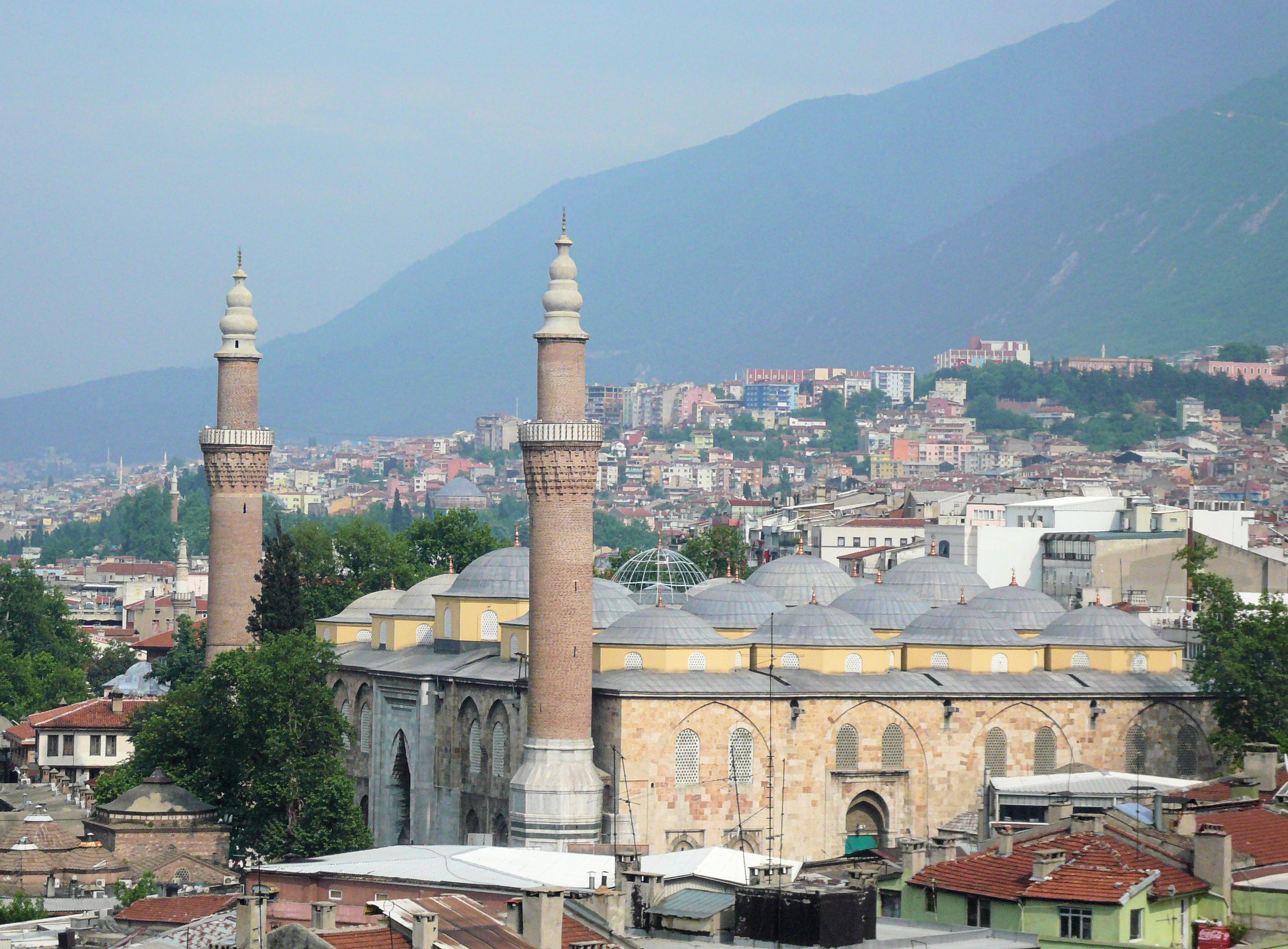
The Grand Mosque of Bursa, or Bursa Ulu Cami, is a monumental religious structure commissioned by the Ottoman Sultan Bayezid I and completed in 1399. It represents a pinnacle of early Ottoman architecture, characterized by its unique multi-domed design rather than the single large central dome that would define later imperial mosques. The building is supported by twelve massive piers that divide the interior into twenty distinct bays, each topped by a dome.
The interior is renowned for its extensive collection of Islamic calligraphy, featuring 192 monumental wall inscriptions executed by various masters of the art. These inscriptions, which include verses from the Quran and hadiths, transform the mosque into a gallery of Ottoman calligraphic history. The central fountain, or shadirvan, located beneath the central dome, remains a focal point of the interior space, reflecting the mosque's historical role as a center for both prayer and community gathering.
Key Facts
- Materials
- Cut stone, Brick, Lead
- Civilization
- Ottoman
- Accessibility
- Ground level access
- Date(s)
- 1396-1399
- Condition
- Well-preserved and active
- Original Function
- Congregational Mosque
- Key Figures
- Sultan Bayezid I
Commission and Construction
1396-1399The mosque was commissioned by Sultan Bayezid I following his victory at the Battle of Nicopolis. It was built to serve as the primary congregational mosque for the city of Bursa, which was then the capital of the burgeoning Ottoman state.
Architectural Evolution
15th-19th centuryThe structure survived the devastating earthquake of 1855, which caused significant damage to the domes and minarets. Subsequent restorations in the late 19th century repaired the structural integrity while preserving the original layout and the extensive calligraphic program.
Modern Status
20th century - presentThe mosque was inscribed as part of the UNESCO World Heritage site 'Bursa and Cumalıkızık: the Birth of the Ottoman Empire' in 2014. It continues to function as a major religious site and a primary cultural landmark in Bursa.
Cultural Significance
The Ulu Cami is a cornerstone of Ottoman architectural identity, marking the transition from Seljuk-influenced styles to a distinct Ottoman aesthetic. Its interior calligraphy is considered one of the most significant collections of its kind in the Islamic world, serving as a repository of Ottoman artistic and religious expression.
Locally, the mosque is deeply embedded in the social fabric of Bursa. It serves not only as a place of worship but as a symbol of the city's historical importance as the first major capital of the Ottoman Empire.
Interpretive Notes
Scholarly debates and areas of uncertainty
There is ongoing academic discussion regarding the architectural influences of the mosque's twenty-dome layout. While some scholars point to earlier Seljuk prototypes, others argue that the design represents a deliberate departure from traditional forms to accommodate the specific needs of a large congregational space in a capital city.
Visiting Information
Entry Rules
Open daily. Entry is free. As an active mosque, visitors should avoid visiting during prayer times. Modest dress is required, and women are asked to cover their heads.
Best Times to Visit
Early morning or late afternoon to avoid peak tourist crowds and prayer times. Weekdays are generally quieter than weekends.
Photography
Personal photography is permitted without flash. Avoid photographing individuals during prayer.
Nearby POIs
0 shownNo nearby POIs listed yet.
Sources & Further Reading
- [1]Bursa and Cumalıkızık: the Birth of the Ottoman Empire — UNESCO World Heritage Centre. UNESCO (2014)View
- [2]The Art and Architecture of the Ottoman Empire — Godfrey Goodwin. Thames & Hudson (1971)
Key Facts
- Materials
- Cut stone, Brick, Lead
- Civilization
- Ottoman
- Accessibility
- Ground level access