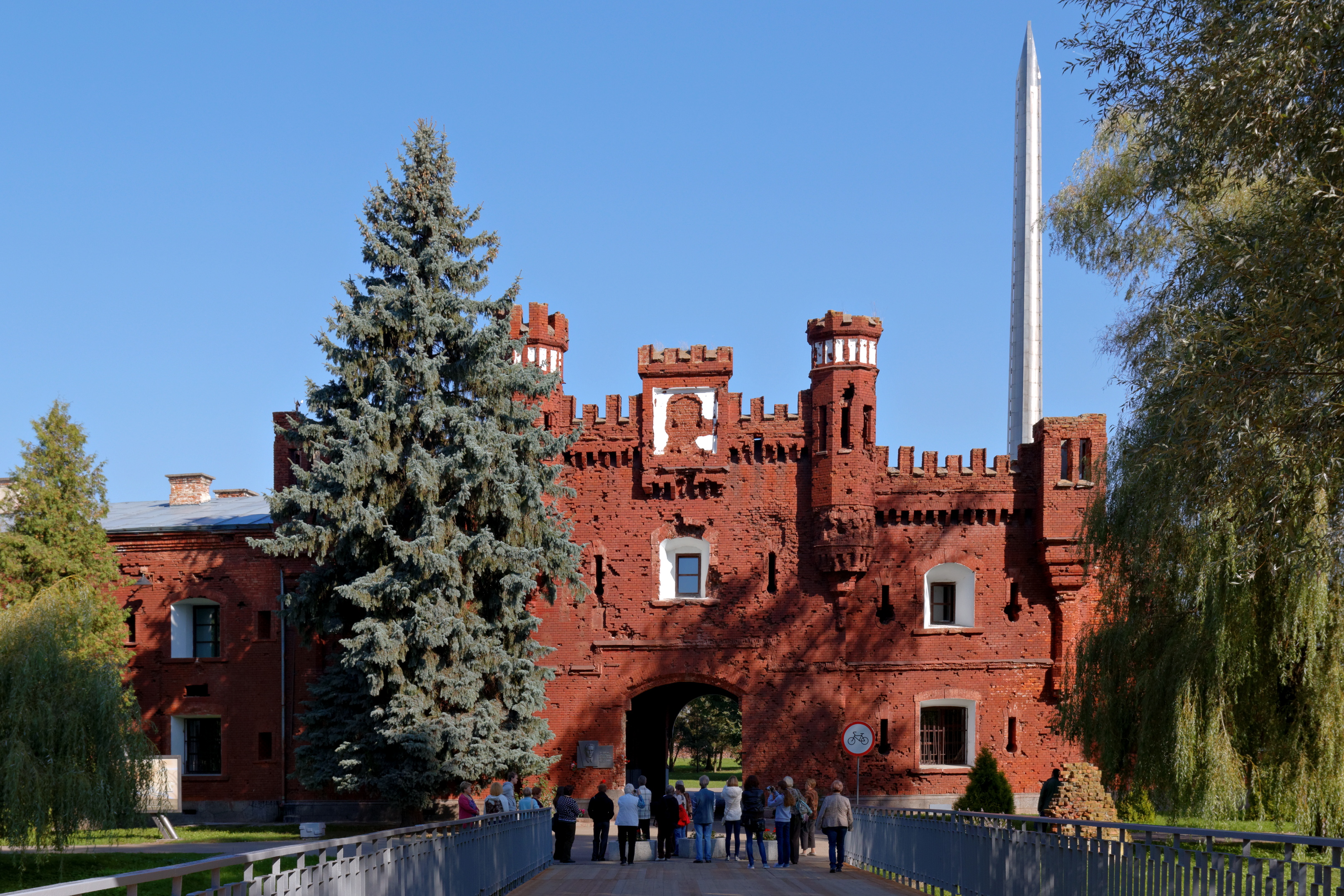
The Brest Fortress is a 19th-century citadel located at the confluence of the Bug and Mukhavets rivers. Originally constructed by the Russian Empire to defend its western borders, the site consists of a central citadel surrounded by three fortified islands formed by the river channels and defensive moats.
The fortress gained international prominence for its role during the opening stages of Operation Barbarossa in June 1941. The garrison held out against German forces for several weeks, far longer than anticipated, becoming a potent symbol of Soviet resistance and later designated as a 'Hero Fortress' in 1965.
Key Facts
- Materials
- Brick, Stone, Earthworks
- Civilization
- Russian Empire
- Accessibility
- Ground level accessible, extensive walking required
- Date(s)
- 1833-1842
- Condition
- Memorial complex and museum
- Original Function
- Military fortification
- Key Figures
- Karl Oppermann
Construction and Early Years
1833-1842Designed by military engineer Karl Oppermann, the fortress was built on the site of the old city of Brest-Litovsk, which was demolished to make way for the massive defensive structure. It served as a key strategic point for the Russian Empire.
World War I and Interwar Period
1914-1939The fortress was evacuated and partially destroyed by retreating Russian forces in 1915. Following the Treaty of Brest-Litovsk and the subsequent Polish-Soviet War, the site fell under Polish control before being annexed by the Soviet Union in 1939.
The 1941 Siege
June 1941On June 22, 1941, the fortress was one of the first targets of the German invasion of the Soviet Union. The garrison, caught by surprise, mounted a desperate and prolonged defense that lasted well into July, significantly disrupting German logistics.
Memorialization
1965-PresentIn 1965, the fortress was awarded the title of 'Hero Fortress.' A massive memorial complex was inaugurated in 1971, featuring the iconic 'Courage' monument, which serves as the centerpiece of the site today.
Cultural Significance
The Brest Fortress serves as the primary site of memory for the Great Patriotic War in Belarus. It represents the narrative of collective sacrifice and defiance against overwhelming odds. The site is central to the national identity of Belarus, hosting annual commemorative events that emphasize the historical weight of the 1941 defense.
Interpretive Notes
Scholarly debates and areas of uncertainty
Historical discourse often centers on the exact timeline of the resistance and the extent to which the defense was organized versus spontaneous. Additionally, there is ongoing academic discussion regarding the preservation of the ruins versus the aesthetic requirements of the Soviet-era memorial architecture.
Visiting Information
Entry Rules
The memorial complex is open to the public. The museum exhibitions have specific operating hours, typically closed on Mondays. No specific dress code is enforced, but respectful behavior is expected given the site's status as a war memorial.
Best Times to Visit
Late spring and early autumn offer the most comfortable weather for walking the extensive grounds. June 22nd is significant but extremely crowded due to annual commemorative ceremonies.
Photography
Personal photography is permitted throughout the outdoor memorial grounds. Flash photography may be restricted inside museum galleries.
Preservation Notes
The site includes both preserved ruins and reconstructed elements. Visitors are requested to remain on designated paths and refrain from climbing on the memorial structures.
Nearby POIs
5 shownSources & Further Reading
- [1]The Brest Fortress: A Guide — Brest Hero-Fortress Memorial Complex. Brest Printing House (2015)
- [2]Operation Barbarossa: The Complete History — Jon Latimer. Llewellyn Worldwide (2003)
Key Facts
- Materials
- Brick, Stone, Earthworks
- Civilization
- Russian Empire
- Accessibility
- Ground level accessible, extensive walking required
- Date(s)
- 1833-1842
- Condition
- Memorial complex and museum
- Original Function
- Military fortification
- Key Figures
- Karl Oppermann