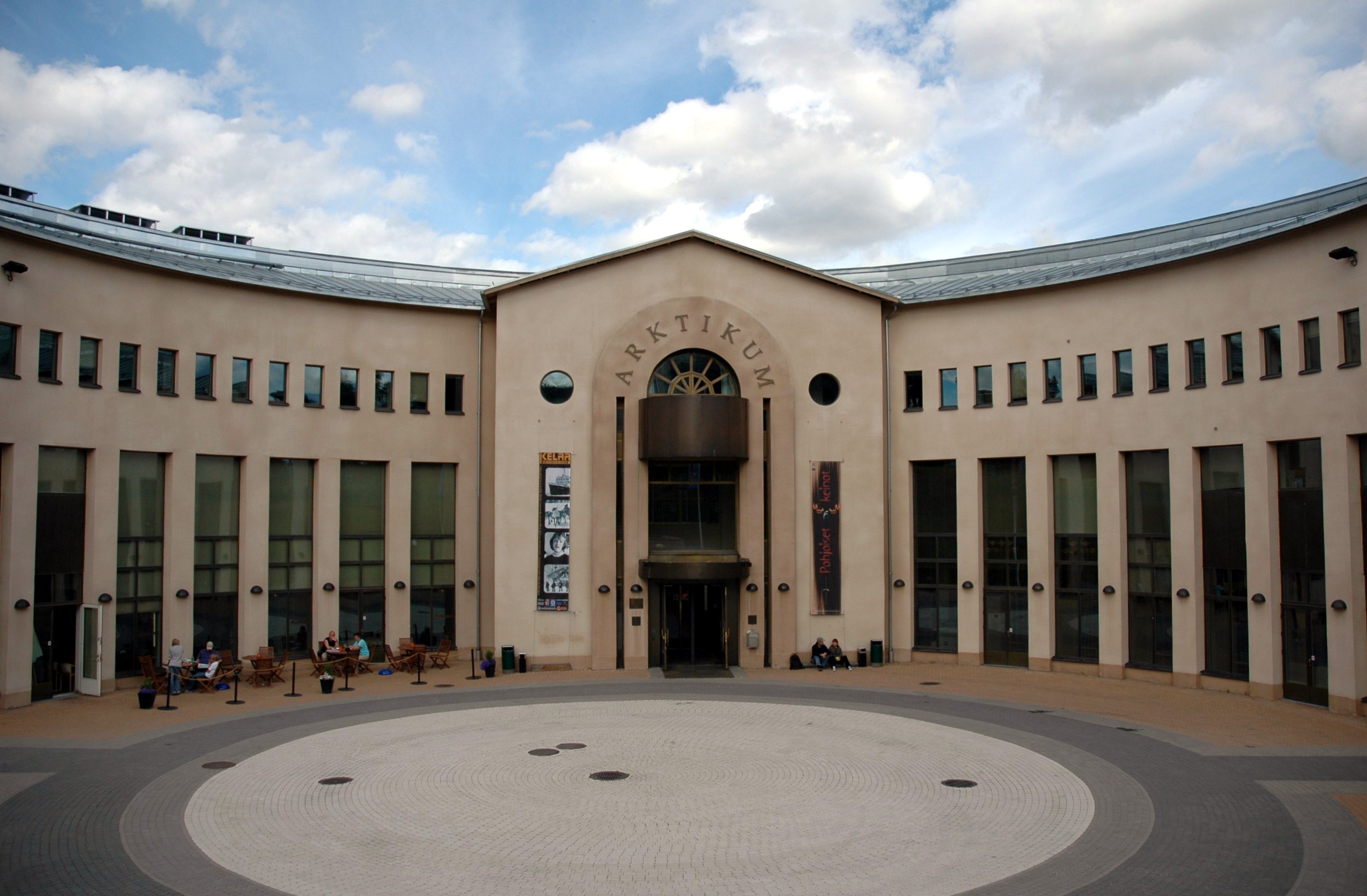
The Arktikum is a science museum and arctic research center located in Rovaniemi, Finland, situated on the banks of the Ounasjoki River. Opened in 1992, the facility serves as a gateway to the Arctic, housing both the Provincial Museum of Lapland and the Arctic Centre of the University of Lapland. The building is renowned for its distinctive 172-meter-long glass corridor, known as the 'Glass Tube,' which points north toward the Arctic Ocean.
The museum's permanent exhibitions focus on the history, culture, and natural environment of the northern regions. Visitors can explore themes ranging from the life of the indigenous Sámi people and the history of Rovaniemi to the complex ecological challenges facing the Arctic today. The architecture itself is designed to reflect the harsh yet beautiful northern landscape, utilizing local materials and innovative structural engineering to withstand the subarctic climate.
Key Facts
- Materials
- Glass, Steel, Local granite, Wood
- Civilization
- Finnish
- Accessibility
- Fully wheelchair accessible
- Date(s)
- 1992
- Condition
- Active
- Original Function
- Museum and research center
- Key Figures
- Birgitta Rahm, Claus Bonderup, Juhani Pallasmaa
Conception and Design
1980sThe project was initiated to create a centralized facility for Arctic research and cultural heritage. An international architectural competition was held in 1984, won by the Danish firm Birch & Bonderup in collaboration with Juhani Pallasmaa.
Construction and Opening
1989-1992Construction began in 1989, emphasizing the integration of the building into the riverbank landscape. The museum officially opened to the public on December 6, 1992, coinciding with Finland's 75th anniversary of independence.
Modern Expansion
21st CenturyThe Arktikum has continued to evolve as a primary hub for international Arctic discourse. It frequently hosts global conferences on climate change and indigenous rights, solidifying its role as a bridge between scientific research and public education.
Cultural Significance
The Arktikum is a cornerstone of Rovaniemi's identity, symbolizing the city's role as the 'Gateway to the Arctic.' It plays a vital role in preserving the cultural heritage of the Sámi and other northern peoples, while simultaneously serving as a critical venue for scientific communication regarding the impacts of climate change on the circumpolar north.
Interpretive Notes
Scholarly debates and areas of uncertainty
Discussions often center on the balance between the museum's dual role as a tourist destination and a serious academic research institution. There is ongoing scholarly interest in how the 'Glass Tube' architecture influences the visitor's perception of the Arctic as a fragile versus a resilient environment.
Visiting Information
Entry Rules
Open daily during the summer season; closed on Mondays during the winter season. Tickets can be purchased at the entrance or online. No specific dress code, though warm clothing is recommended for the surrounding outdoor areas.
Best Times to Visit
Winter months (December-March) for the opportunity to see the Northern Lights from the vicinity, or summer for the Midnight Sun and extended daylight hours for exploring the riverfront.
Photography
Personal photography is permitted in all exhibition areas. Professional or commercial photography requires prior authorization from the museum administration.
Preservation Notes
The glass structure requires specialized maintenance due to the extreme temperature fluctuations of the Arctic climate. Visitors are requested to respect all exhibit displays and refrain from touching sensitive artifacts.
Nearby POIs
0 shownNo nearby POIs listed yet.
Sources & Further Reading
- [1]Arktikum: The Arctic Centre and Provincial Museum of Lapland — University of Lapland. Arktikum Press (2015)View
- [2]Architecture of the North: The Work of Birch & Bonderup — Juhani Pallasmaa. Finnish Architectural Review (1993)
Key Facts
- Materials
- Glass, Steel, Local granite, Wood
- Civilization
- Finnish
- Accessibility
- Fully wheelchair accessible
- Date(s)
- 1992
- Condition
- Active
- Original Function
- Museum and research center
- Key Figures
- Birgitta Rahm, Claus Bonderup, Juhani Pallasmaa
Nearby POIs
0 shownNo nearby POIs listed yet.