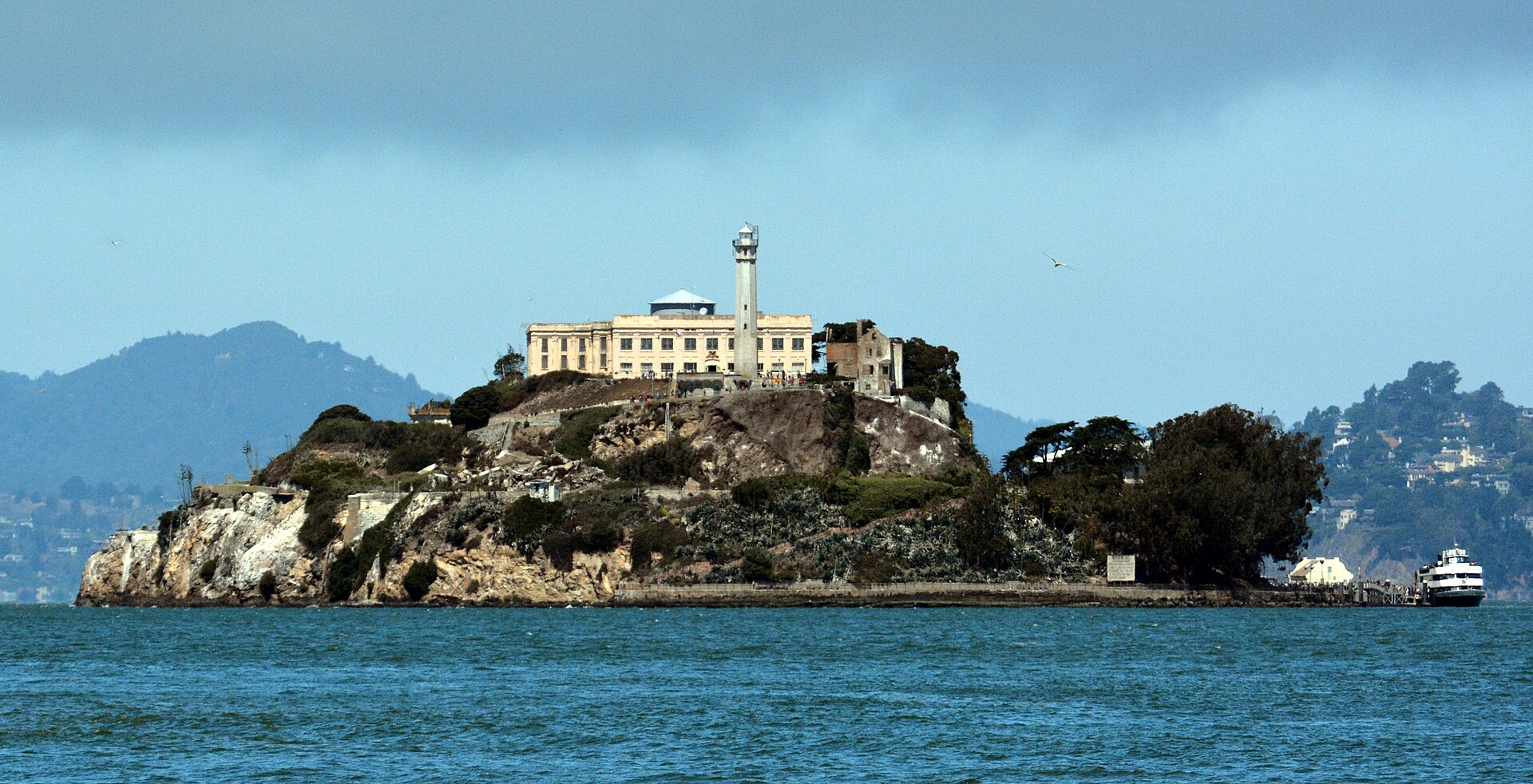
Alcatraz Federal Penitentiary was a maximum-security federal prison located on Alcatraz Island in San Francisco Bay. Operating from 1934 to 1963, it was designed to hold the most dangerous criminals in the United States, including notorious figures such as Al Capone and George 'Machine Gun' Kelly. The facility was famously considered inescapable due to the cold, treacherous currents of the surrounding bay.
Following its closure in 1963, the island became a site of significant political activism, most notably the 19-month occupation by the Indians of All Tribes starting in 1969. Today, the island is managed by the National Park Service as part of the Golden Gate National Recreation Area and serves as a major historical landmark and tourist destination.
Key Facts
- Materials
- Reinforced concrete, Steel, Brick
- Civilization
- United States
- Accessibility
- Accessible by ferry; steep inclines on island
- Date(s)
- 1910-1912 (Military Prison), 1934 (Federal Penitentiary)
- Condition
- Preserved as a historic site
- Original Function
- Military fortification and prison
- Key Figures
- Al Capone, Robert Stroud, James 'Whitey' Bulger
Military Fortification and Prison
1850s-1933Originally developed as a coastal defense fort during the mid-19th century, the island was repurposed as a military prison in the early 1900s. The main cell house, which would later become the federal penitentiary, was constructed by the U.S. Army between 1910 and 1912.
Federal Penitentiary Era
1934-1963The Bureau of Prisons acquired the island in 1933, modernizing the facility to house high-risk inmates. It operated under a strict regime of silence and limited privileges, gaining a reputation as the most secure prison in the federal system.
Occupation and Preservation
1969-PresentAfter the prison closed, the island was occupied by Native American activists in 1969 to protest federal policies. In 1972, it was established as a unit of the Golden Gate National Recreation Area, and it was opened to the public for tours in 1973.
Cultural Significance
Alcatraz occupies a unique place in American popular culture, symbolizing the harshness of the federal penal system and the myth of the 'inescapable' prison. Its legacy is defined by the contrast between its role as a site of incarceration and its subsequent reclamation as a symbol of indigenous rights during the 1969 occupation.
Interpretive Notes
Scholarly debates and areas of uncertainty
Debates persist regarding the effectiveness of the prison's rehabilitation programs versus its punitive nature. Additionally, the historical accuracy of various escape attempts remains a subject of investigation, with the 1962 escape of Frank Morris and the Anglin brothers continuing to be a point of speculation.
Visiting Information
Entry Rules
Access is restricted to visitors with tickets purchased through the official concessionaire. Ferries depart from Pier 33 in San Francisco. Advance booking is highly recommended as tickets often sell out weeks in advance.
Best Times to Visit
Early morning ferries offer the best opportunity to explore the cell house before peak crowds arrive. Weekdays during the off-season (November to March) are generally less crowded.
Photography
Personal photography is permitted throughout the island. Commercial photography requires a special use permit from the National Park Service.
Preservation Notes
The island is a protected historic site. Do not climb on walls, remove artifacts, or enter restricted areas marked by signage. The environment is sensitive; please pack out all trash.
Nearby POIs
0 shownNo nearby POIs listed yet.
Key Facts
- Materials
- Reinforced concrete, Steel, Brick
- Civilization
- United States
- Accessibility
- Accessible by ferry; steep inclines on island
- Date(s)
- 1910-1912 (Military Prison), 1934 (Federal Penitentiary)
- Condition
- Preserved as a historic site
- Original Function
- Military fortification and prison
- Key Figures
- Al Capone, Robert Stroud, James 'Whitey' Bulger
Nearby POIs
0 shownNo nearby POIs listed yet.